2026
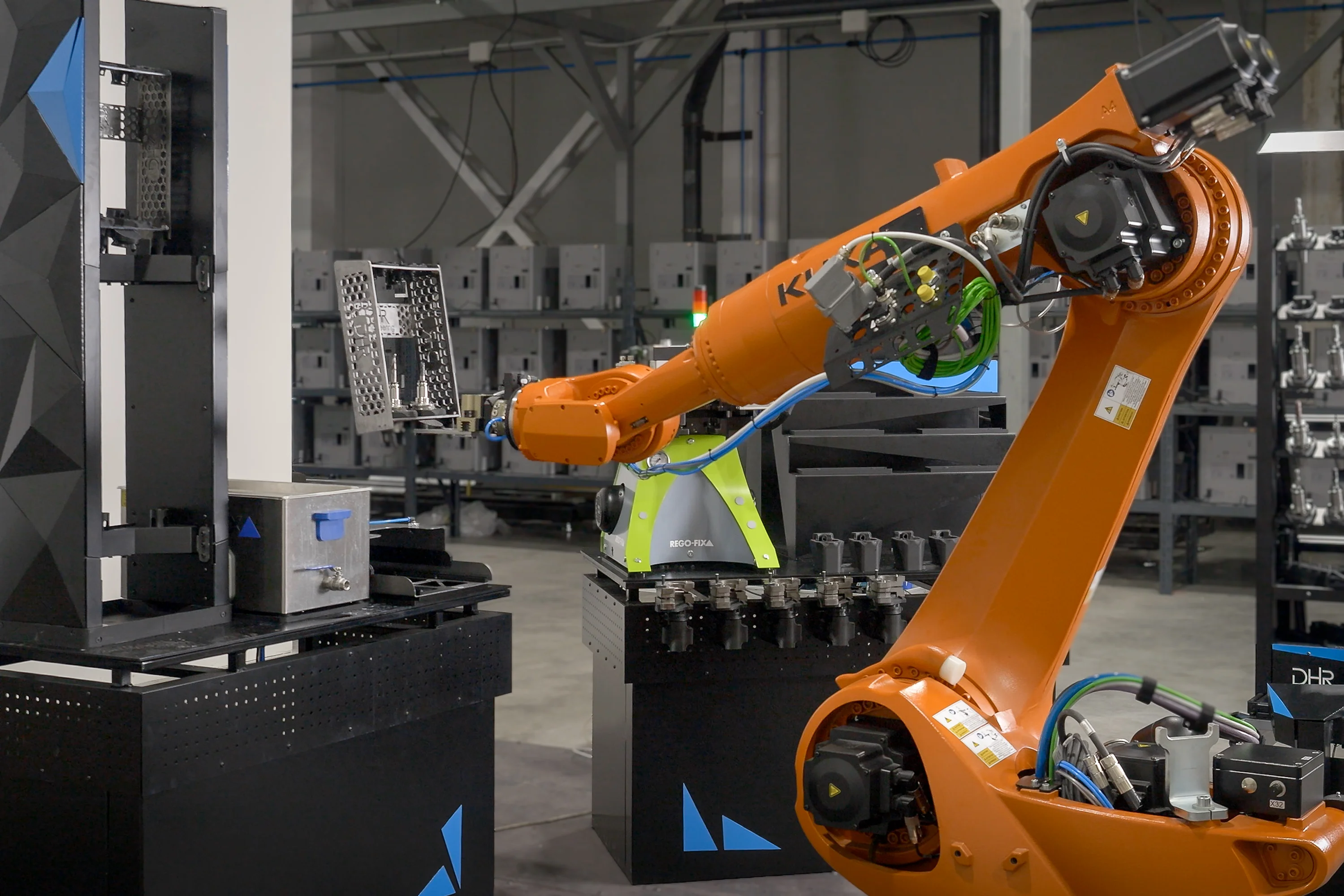
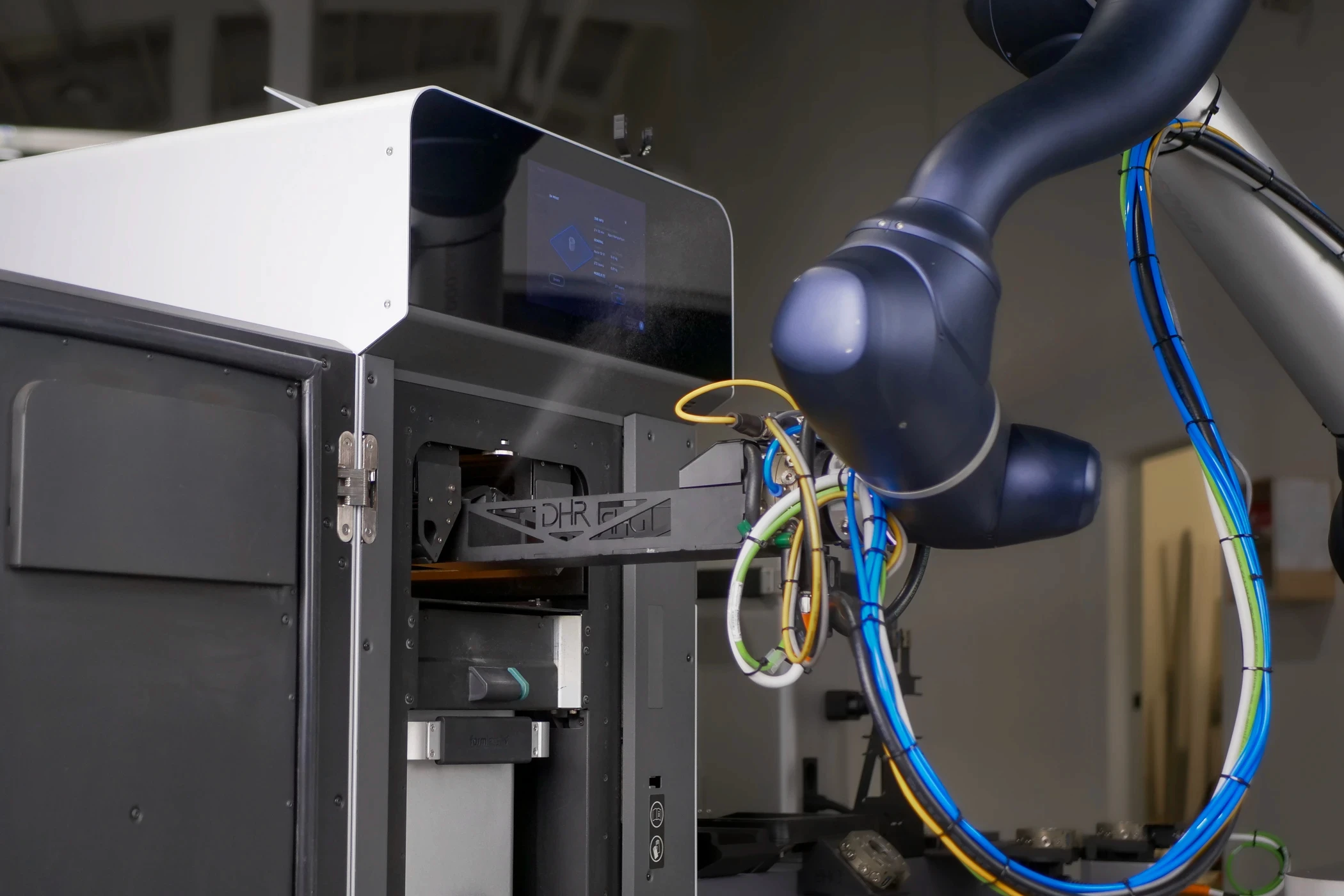
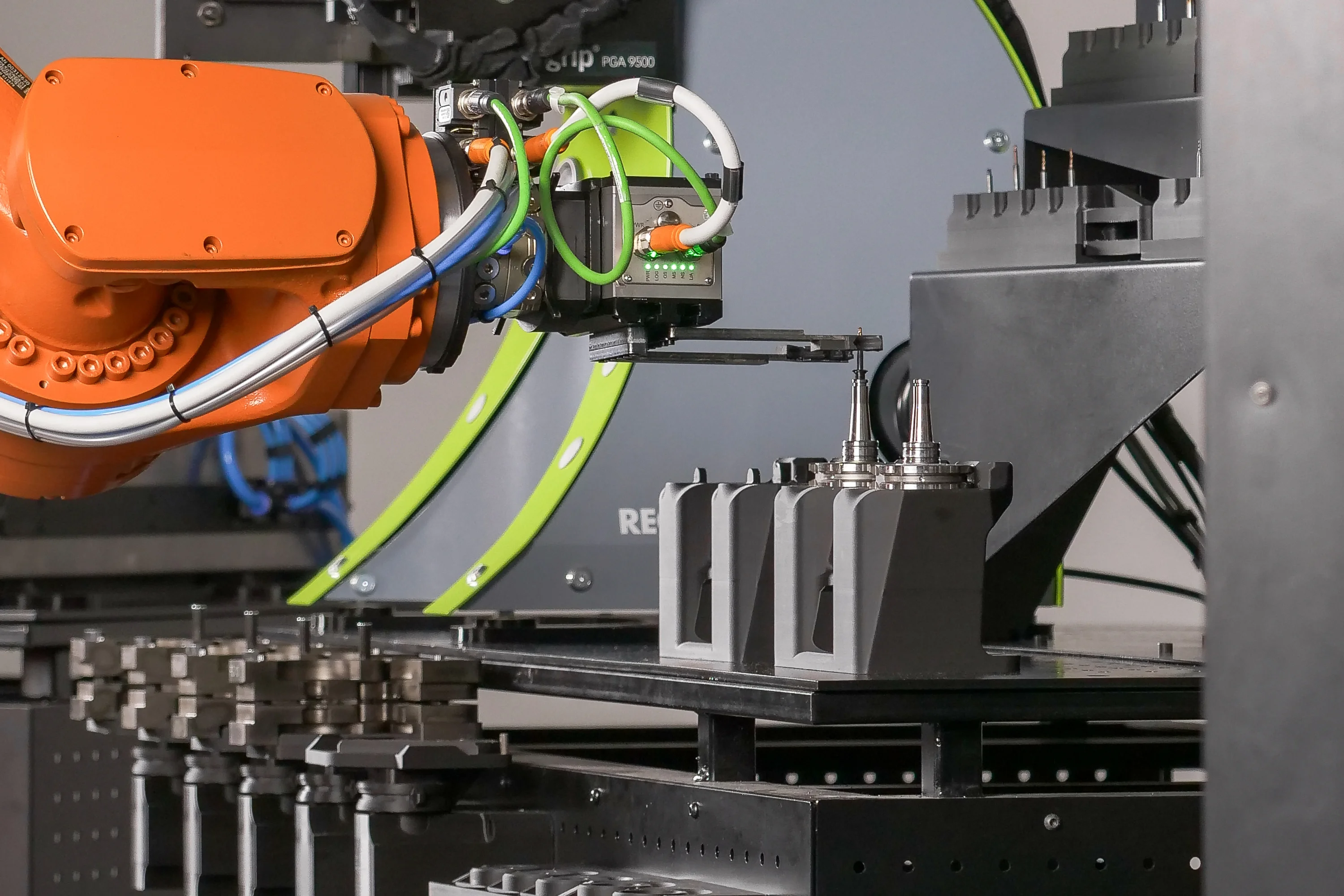
DHR built a robotic cell that automates the complete powRgrip tool holder lifecycle. A KUKA robot handles the REGO-FIX PGA 9500, the washing and drying stations, and the tool cart, without requiring an operator.
Tool Assembly
Manufacturing
Overview
At DHR, CNC automation is what we do, and we've gone deep on it. Robotic machine tending, multi-machine cells, pallet systems, fleet orchestration – we've solved a lot of the hard problems that stand between a production facility and true lights-out manufacturing. But the further you go down that road, the more clearly one problem comes into focus: the tool prep.
Tool assembly sits at the center of every CNC operation, and almost nobody automates it. Parts load themselves. Pallets rotate on their own. The machines run through the shifts. But when tools wear out, a person has to break down the holders, clean the collets, and rebuild everything for the next job. In a high-mix environment that can mean 20 to 30 assemblies between jobs, and the whole process is manual, detail-sensitive, and completely outside the automation you've already built.
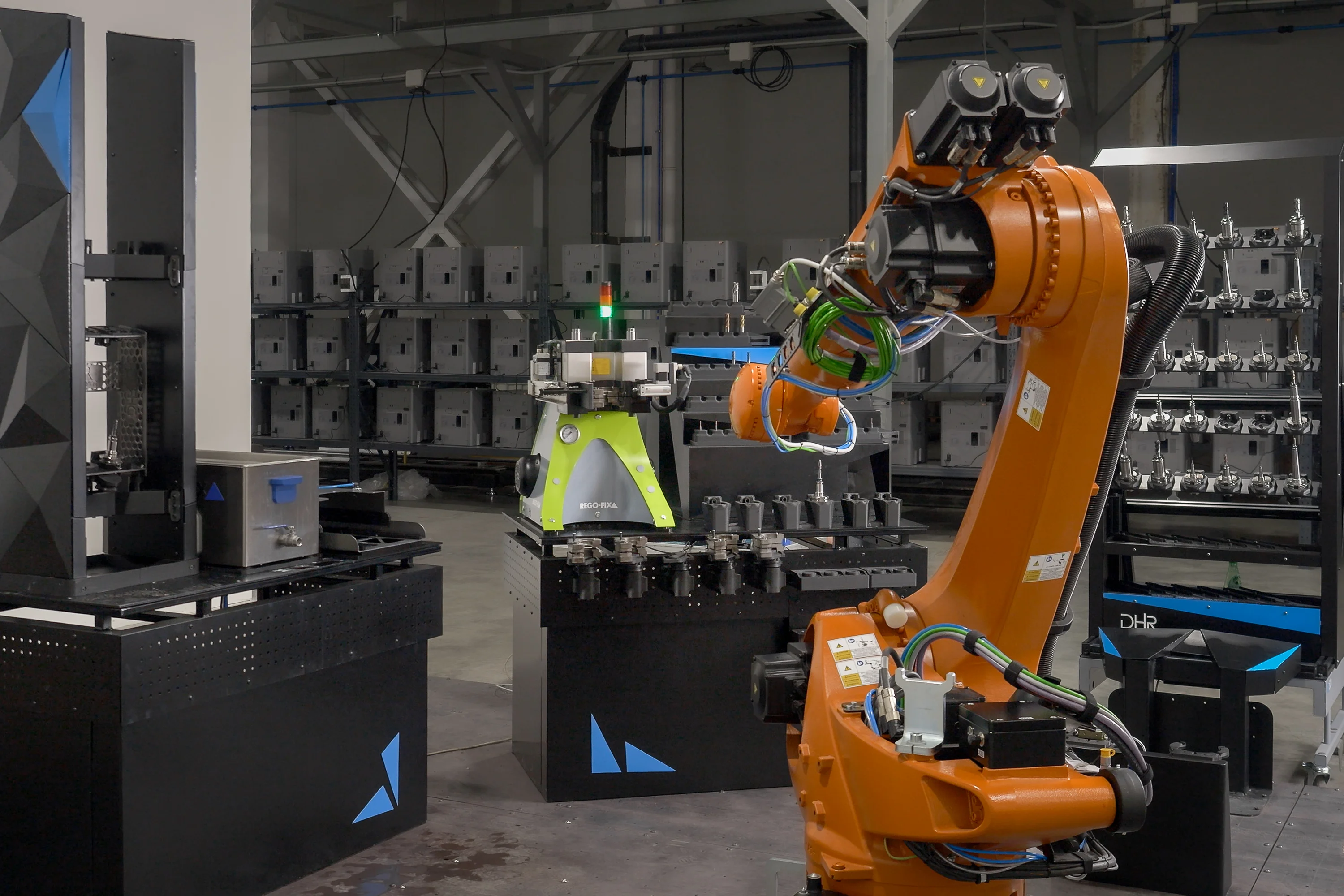
So we built an answer. A robotic cell that acts as a 24/7 toolroom, fully integrated with the REGO-FIX powRgrip system. A 6-axis KUKA robot manages every step: retrieving used assemblies from an automated tool cart, cleaning them ultrasonically, drying them, swapping press inserts as needed, and reassembling holders with new tools or different collet configurations. No operator is required at any point in the cycle.
Problem
Tool Assembly Is the Bottleneck Nobody Talks About
Most machine shops run high-mix, low-volume production. That means a set of 30 tool assemblies for one job might share only two holders with the next job. Every time a new program runs, tool assemblies need to be broken down, cleaned, and rebuilt. The process is continuous and it never ends.
Manual tool assembly creates problems at every point in that cycle:
Cleaning steps get skipped. Proper preparation requires washing the collet, cutter, and holder before and after disassembly. In practice, operators under time pressure skip those steps. The result is accelerated wear on expensive collets and holders.
Errors stop production. A single wrong assembly, a missing tool, or a broken cutter can halt an automated line and hold up production until the next shift, or the right operator is available.
The job has a high attrition rate. Tool assembly is repetitive, requires zero-defect attention, and offers no variety. Training time is long. Turnover is constant.
Manual prep creates a ceiling on pallet automation. Automated pallet changers require tools to be staged and ready. If tool prep is the bottleneck, the pallet changer doesn't help.
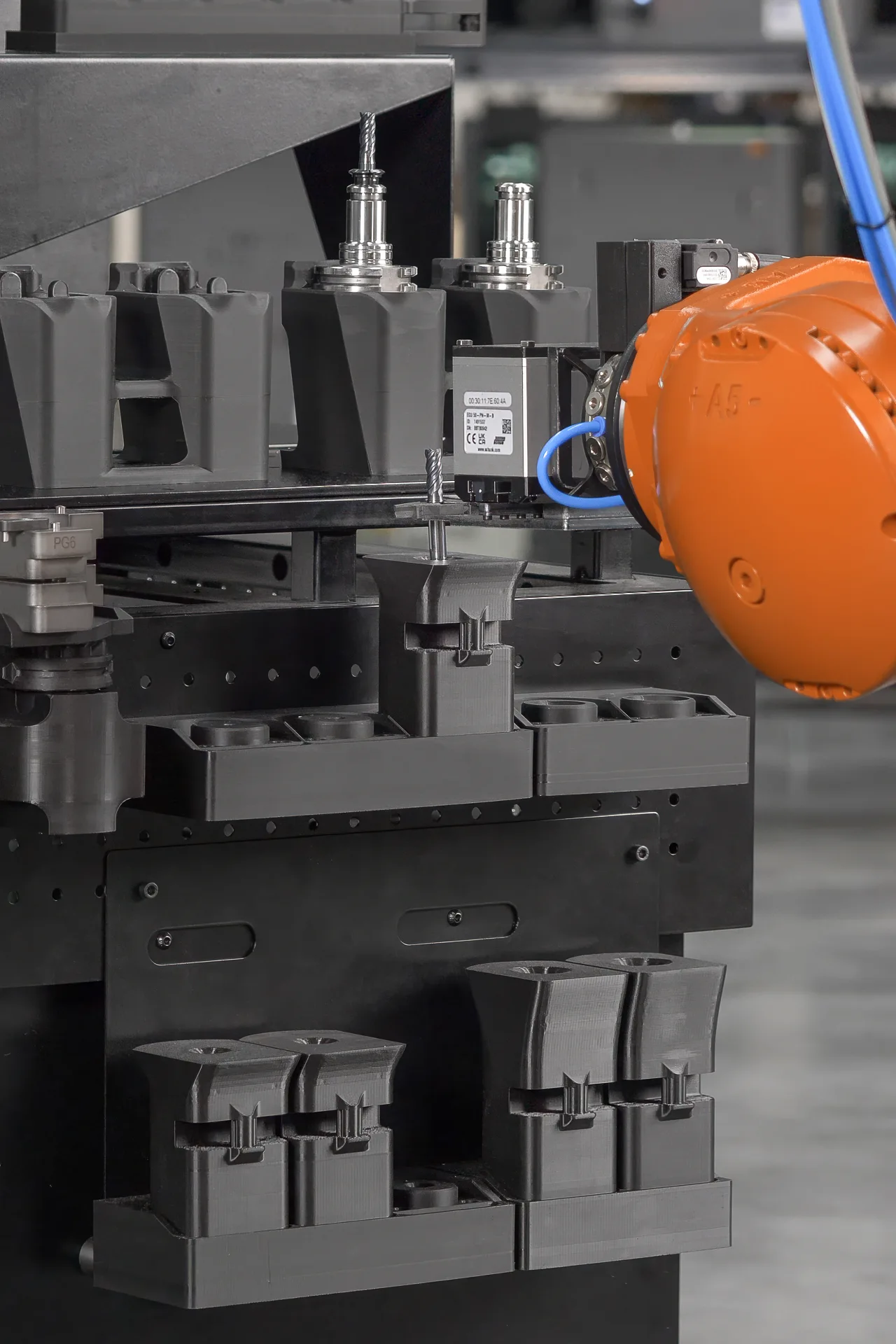
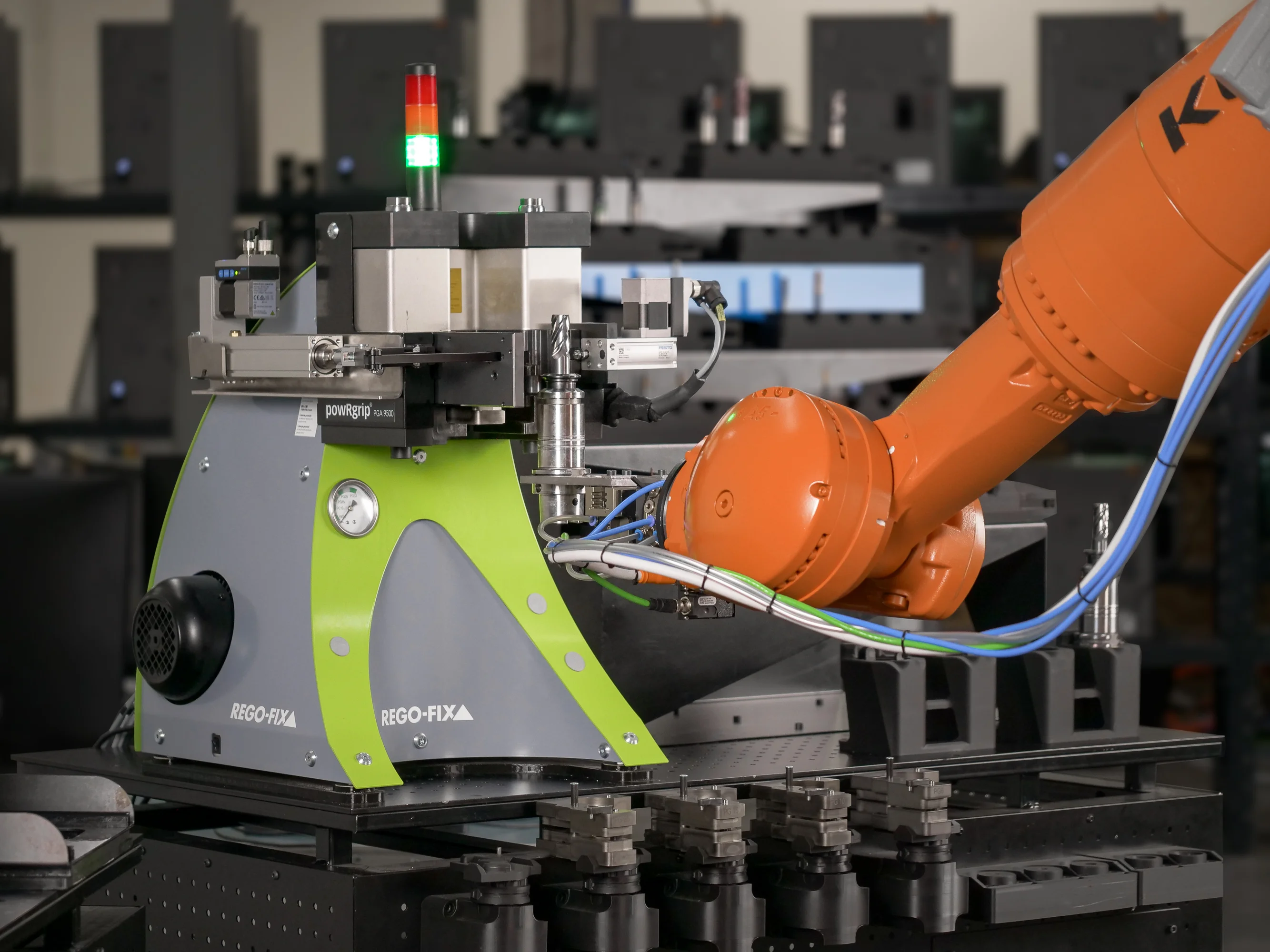
The REGO-FIX PGA 9500 is a precision automatic clamping unit with five interchangeable clamping inserts (APG), each corresponding to a different powRgrip collet size. Changing between inserts manually adds friction to every job changeover. The question was whether the entire assembly workflow, including insert selection, could be handed to a robot. And as it turns out, it can.

What we did
A Robotic Cell Built Around the Full Assembly Cycle
DHR Engineering designed the cell to cover every step from dirty used assembly to clean, configured, and ready-to-run tool holder. The cell consists of four main components: an automated tool cart with modular trays, dedicated washing and drying stations, the REGO-FIX PGA 9500 press with automatic APG insert exchange, and a KUKA robot arm with tool changer.
Automated Tool Cart
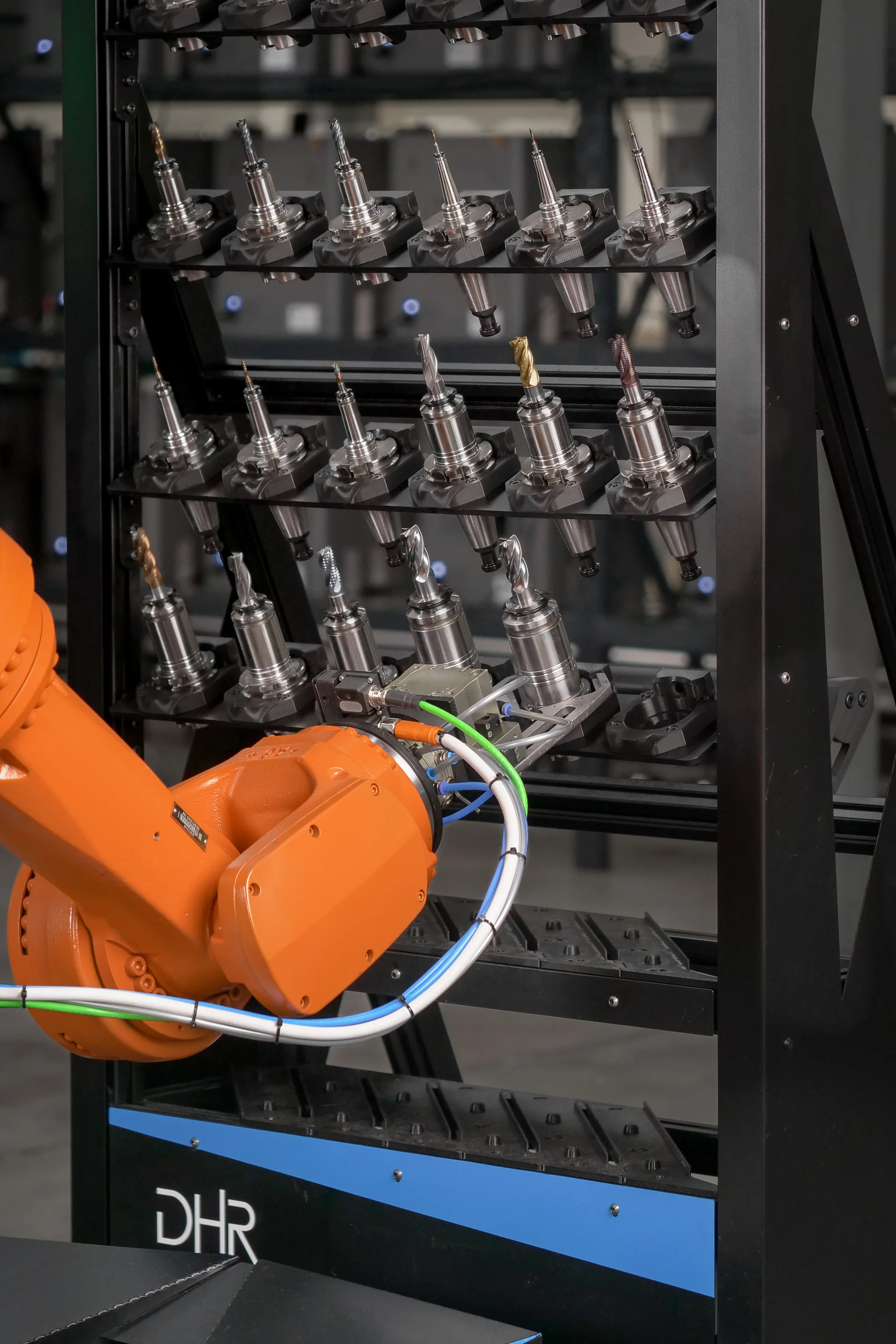
The cell is fed by a mobile tool cart designed to carry fully assembled tool holders, new cutting tools, and auxiliary collets. The cart uses modular carrier trays sized to hold cutting tools from Ø2 to Ø36 mm and all REGO-FIX collets: PG 6/10/15/25/32. Standardized tray geometry lets the robot pick and place consistently regardless of which collet or cutter is in position.
Washing & Drying Station
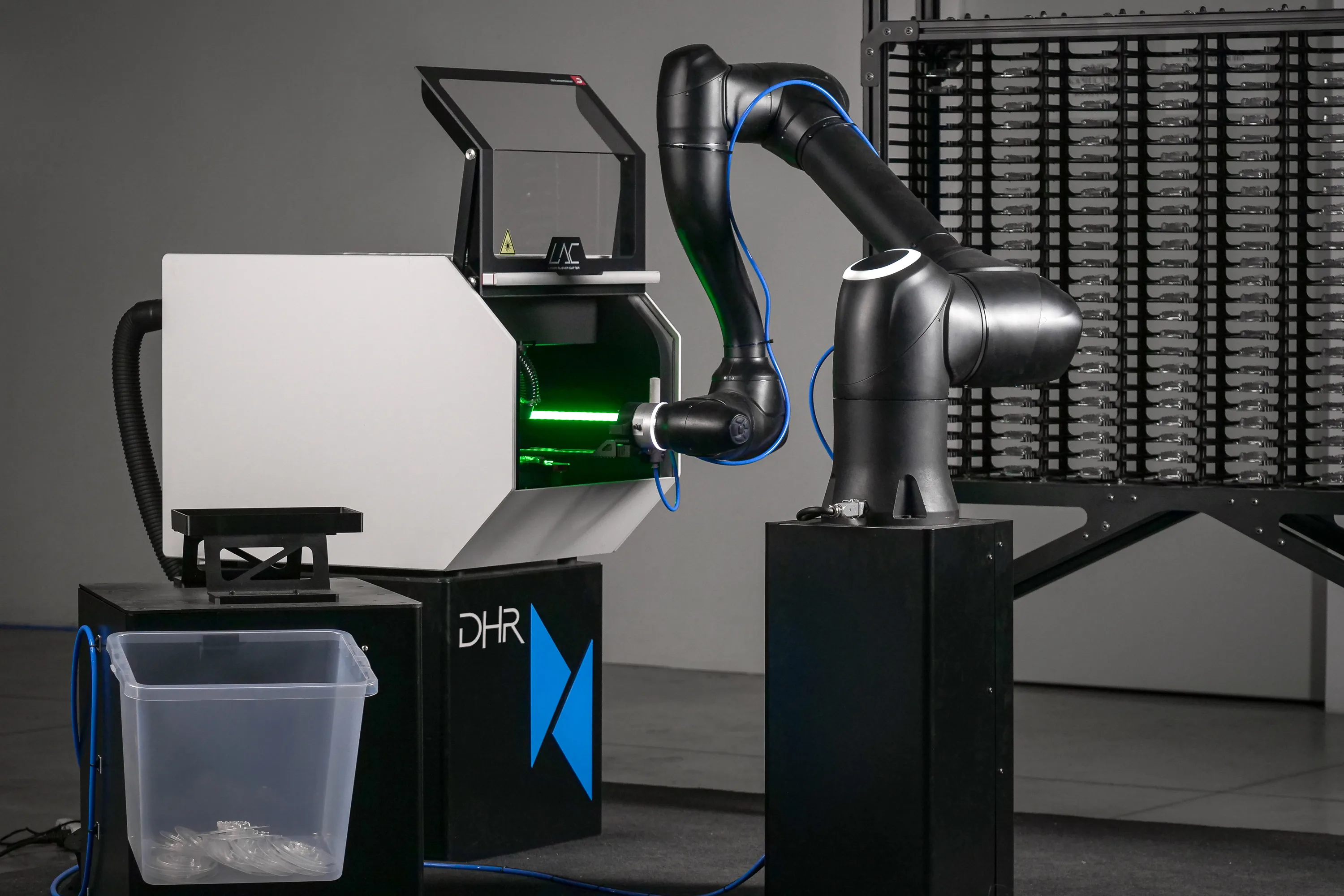
Cleaning is one of the most commonly skipped steps in manual tool prep. We built a custom washing station with two dedicated trays - one tray configured for HSK-A 63 holders, and one for SK 40. The robot places the assembled holders into the correct tray, which then go into the ultrasonic bath.
Cleaning happens at two distinct points in the cycle. First, assembled holders are cleaned before disassembly to remove surface contamination and cutting fluid residue. Second, holders and collets are cleaned again after disassembly and before reassembly, so the new tool seats into a clean, residue-free collet. The ultrasonic process removes oil, grease, metal chips, and polishing residues from hard-to-reach surfaces using cavitation, without mechanical friction or chemical damage to precision components.
After washing, the trays with tool holders and collets move to an automated drying station. The drying cycle runs while the cell moves on to other tasks.
PGA 9500 Integration and Automatic Insert Exchange
The core engineering challenge of this build was the full integration of the REGO-FIX PGA 9500 clamping unit into the robotic workflow. The PGA 9500 clamps powRgrip collets hydraulically at up to 90 kN in under 10 seconds, with no heat and no parameter setup. It uses five APG clamping inserts, one for each collet size from PG6 to PG32. In normal use, selecting and swapping inserts is a manual step. We designed robot-compatible carriers for all five, so the KUKA selects and exchanges them autonomously based on the job specification. The clamping unit operates under robot control for both disassembly and reassembly.
Scalable End-to-End Workflow
We designed the cell to grow. Adding support for a new holder standard beyond HSK-A 63 and SK 40 means a tray configuration, not a redesign of the cell. But the modularity goes further than tray geometry. Manufacturers expanding their automation add a presetter for automatic tool length and diameter measurement, a VLM or automated storage system for higher tool inventory capacity, or additional holder types as their machining requirements evolve. The cell is the starting point. What gets added to it depends on where the operation needs to go.
Conclusion
An Unlimited Tool Magazine for Every Machine You Run
The cell works because the REGO-FIX clamping unit is inherently automatable – one input, the same result every cycle. The KUKA arm does exactly what an operator would do, faster, without variation, through the night and weekends. The result is a tool preparation cell that runs unattended around the clock: retrieve assembled holder from cart, clean ultrasonically before disassembly and dry, disassemble at the PGA 9500, clean and dry holder and collet again after disassembly, select the correct APG insert, reassemble with new tool or collet, return finished assembly to cart.
The biggest impact is on spindle utilization. Manual tool prep creates hard stops such as production waits for the next shift, the right operator, or the right tool assembly. This cell eliminates that dependency. Connected to a CNC fleet and an automated presetter, it becomes part of a fully automated manufacturing line where any tool holder and tool combination can be prepared and loaded to any machine at any time, regardless of brand or age.
Ready to close the gap in your production? If lights-out production is your goal and the toolroom is standing in your way, talk to our team at dhr.is/contact.
For more on why tool assembly automation matters across production environments, see our related post on tool prep as the missing link in CNC automation.