April 24, 2026
Additive Manufacturing Is Ready for the Factory Floor — It Just Needs Automation
RAPID + TCT 2026 made one thing clear: additive manufacturing has crossed the threshold from capability demonstration to serial production. The machines are faster, the materials are better, and the applications, from battlefield drone manufacturing to point-of-care medical devices, have never been more urgent. What's holding the industry back now isn't hardware. It's the labor model around it, and automation is the fix.
RAPID + TCT 2026 made one thing clear: additive manufacturing has crossed the threshold from capability demonstration to serial production. The machines are faster, the materials are better, and the applications, from battlefield drone manufacturing to point-of-care medical devices, have never been more urgent. What's holding the industry back now isn't hardware. It's the labor model around it, and automation is the fix.
Additive Manufacturing
Events
3D Printing Automation
Additive Manufacturing
3D Printing Automation
Events
Table of Contents
RAPID + TCT 2026: Boston Sets the Stage for Industrial AM
The Industry's Focus Has Shifted to Production
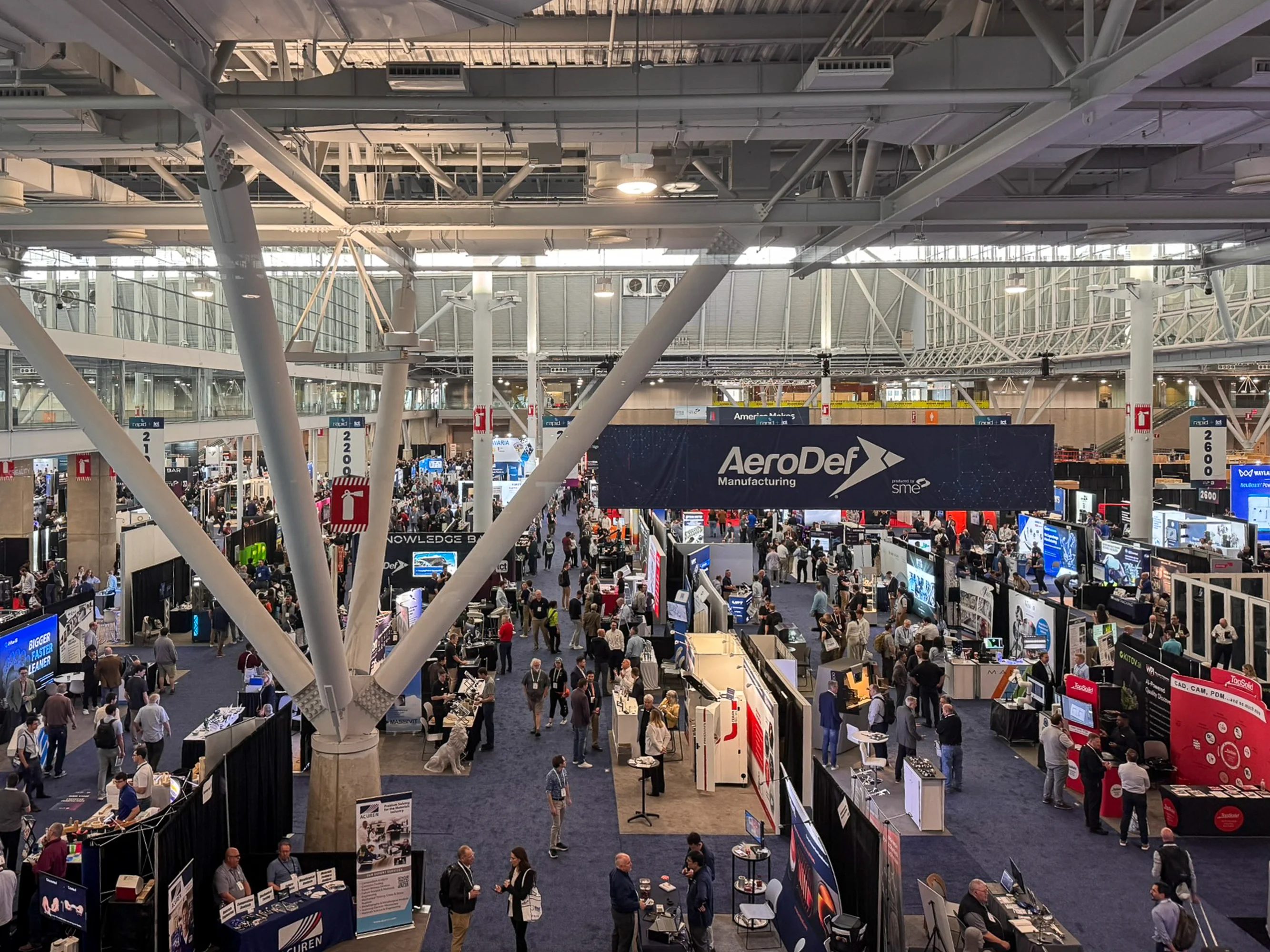
RAPID + TCT made its long-awaited debut in Boston this April, and the choice of venue was no accident [^1]. The city's dense cluster of life sciences companies, robotics startups, aerospace research institutions, and AI labs made it a natural home for an event that has been evolving from a 3D printing showcase into a serial manufacturing summit [^2].
With over 450 exhibitors, 168 technical presentations, and more than 200 expert speakers, including leaders from NASA, the U.S. Army, Boeing, and major OEMs, the 2026 edition was the most industrially focused RAPID in the event's three-decade history [^3][^4]. The overarching narrative was clear: the industry has moved from "capability" to "production."
As one analysis of the event put it, the 2026 landscape is defined not by a "race for speed" but by material mastery, process reliability, and the economic justification of AM in serial manufacturing environments [^5]. The machines can do the work. The question is whether the systems around them can keep up.
Hardware Is Getting Faster, Which Creates a Workflow Problem
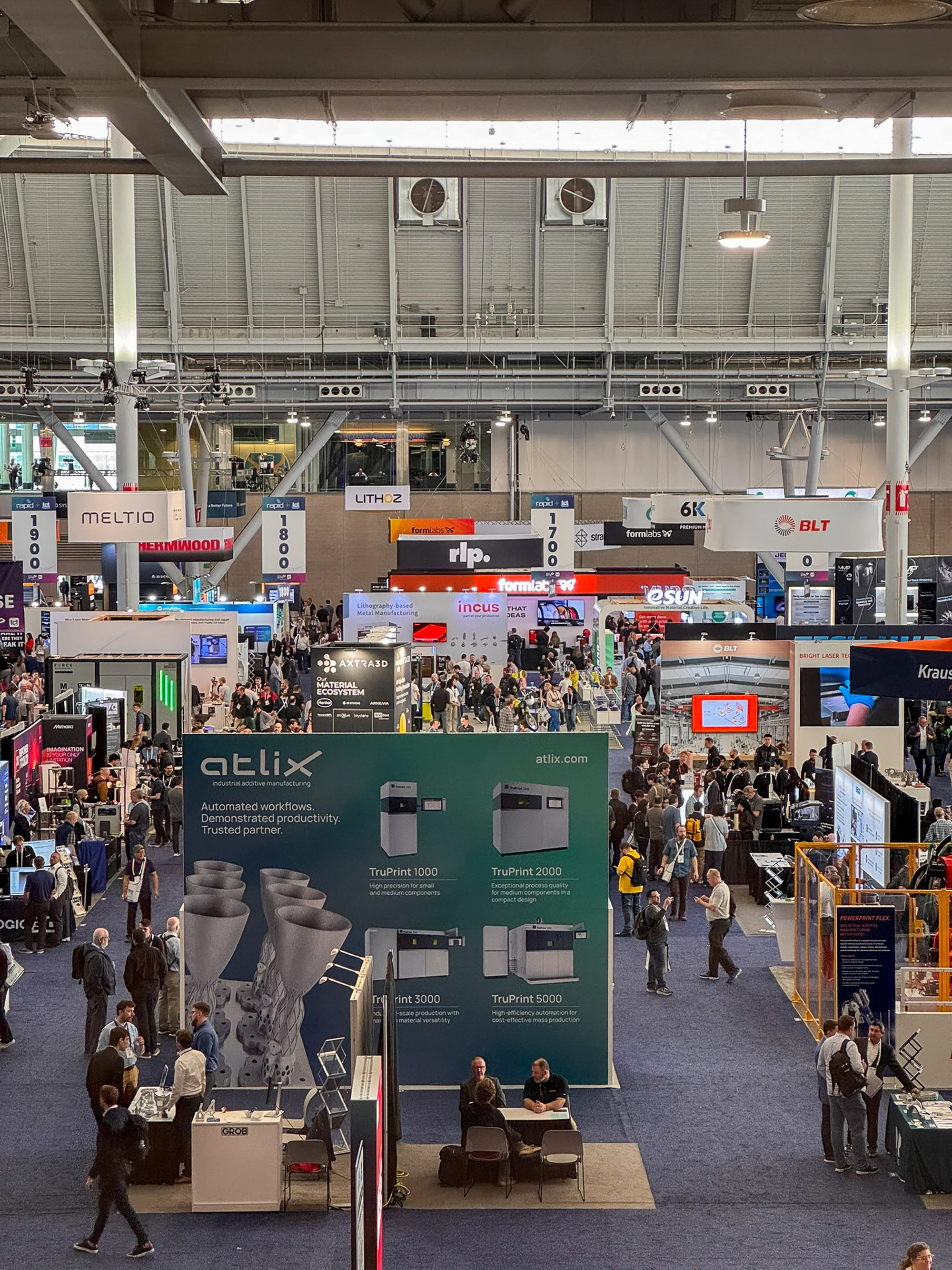
Walk the RAPID + TCT show floor and you'll see generation-over-generation speed improvements everywhere. EOS launched the M4 ONYX, a six-laser metal LPBF system delivering up to 50% higher throughput with up to 97% uptime commitment and approximately 30% cost reduction per part compared to predecessor systems [^12][^13]. HP launched the MJF 1200, a more compact, accessible Multi Jet Fusion system designed to bring industrial-grade polymer production to smaller workshops and decentralized labs, priced under $60,000 [^10]. 3D Systems' new SLA 825 Dual achieves 30% faster print speeds using a dual-laser configuration, targeted directly at high-utilization aerospace and investment casting environments [^11].
What does it mean when a machine can print a part in a fraction of the time it once could?
It means operators need to be there more often. Removing parts, starting new builds, checking quality, preparing the next job. The math becomes uncomfortable quickly. As build times shorten, and they are shortening fast, the human labor loop around the printer becomes the dominant constraint on throughput.
This was one of the most candid conversations we had at the show. Shorter layer times and faster machines mean you need someone at the printer every 10 to 15 minutes in high-throughput environments. Without automation, you're not scaling production, you're scaling headcount.
Kristin Mulherin, Director of Additive Manufacturing Technology at Hubbell, put it plainly at one of the show floor panels:
"Automation (and good software) is everything."
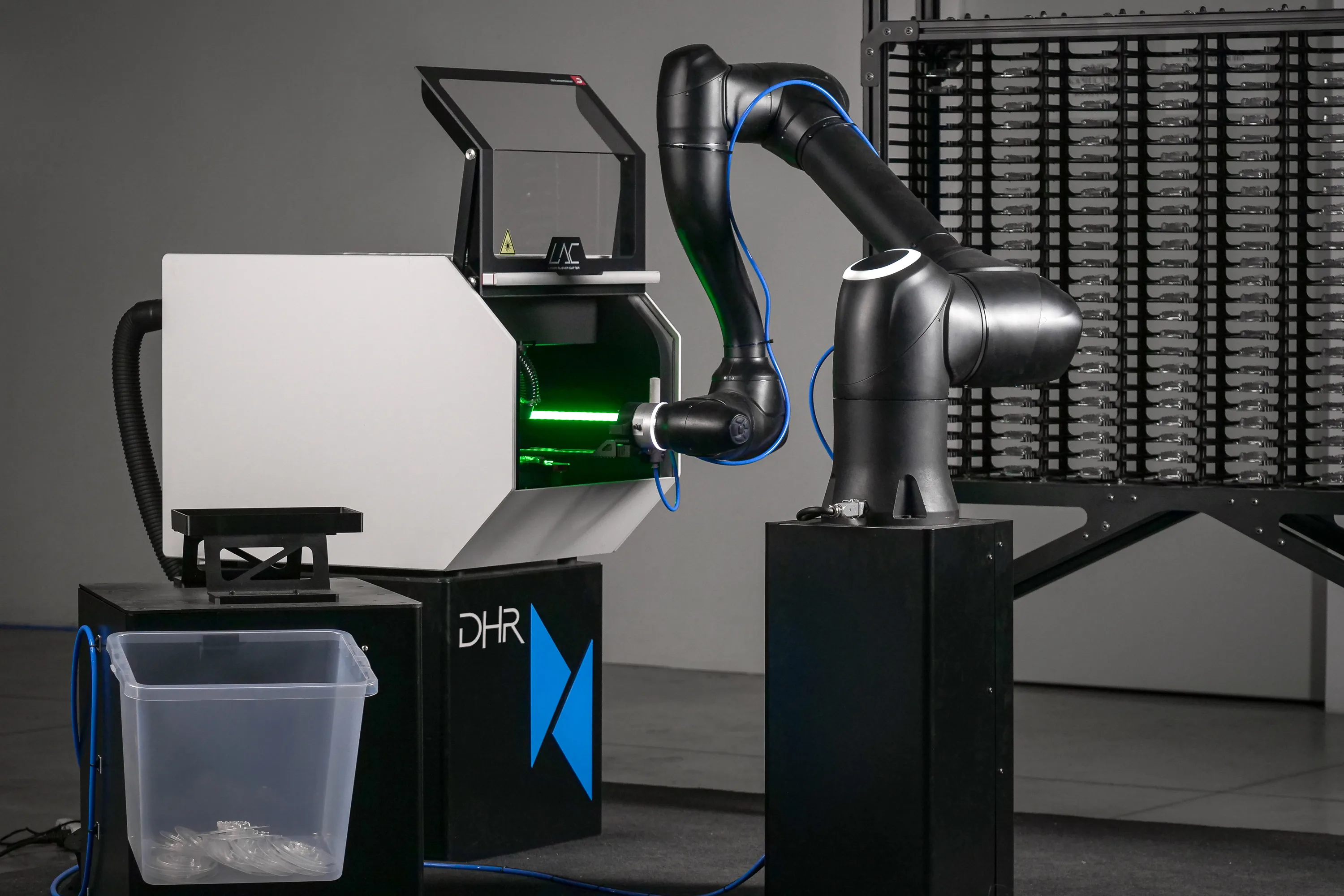
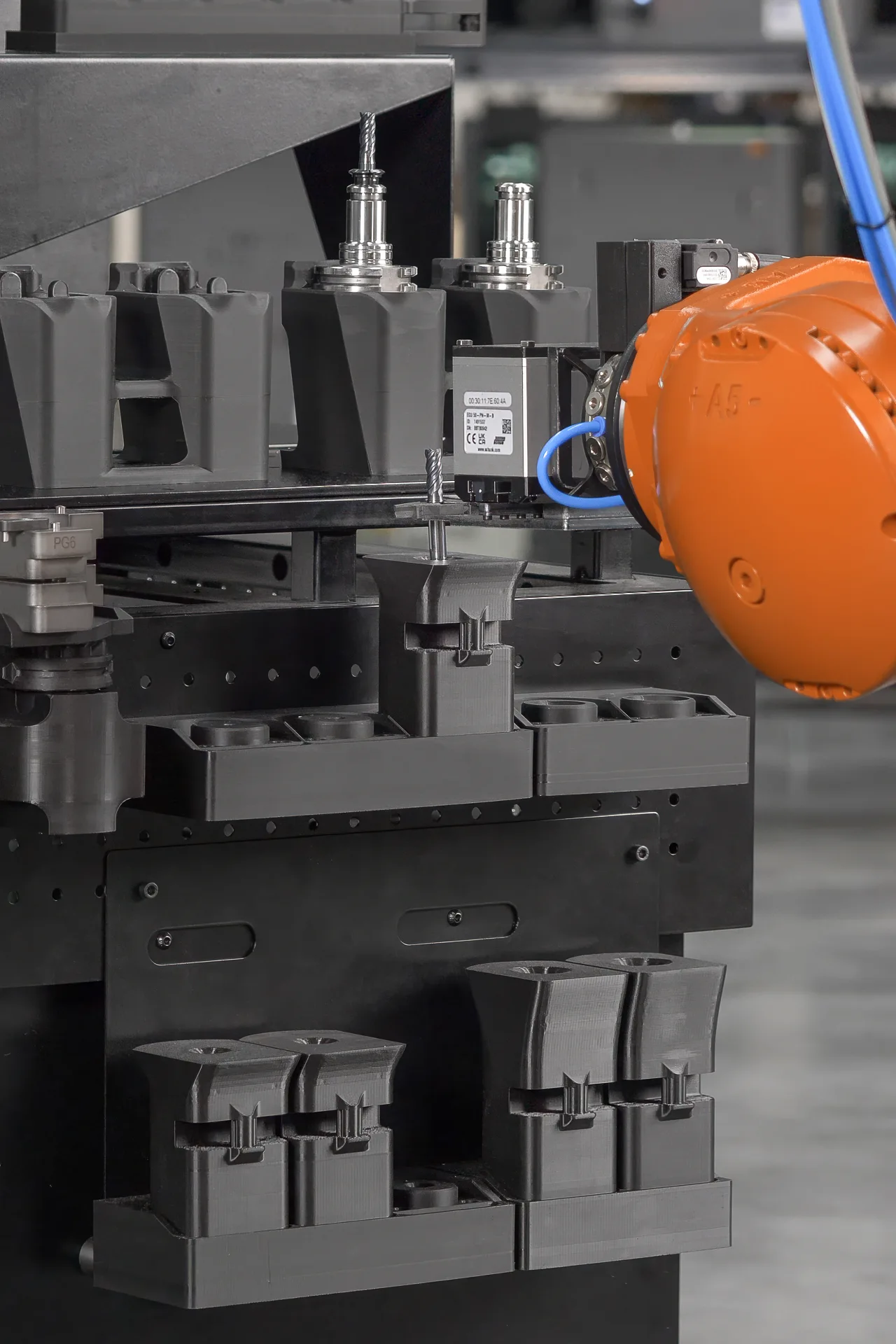
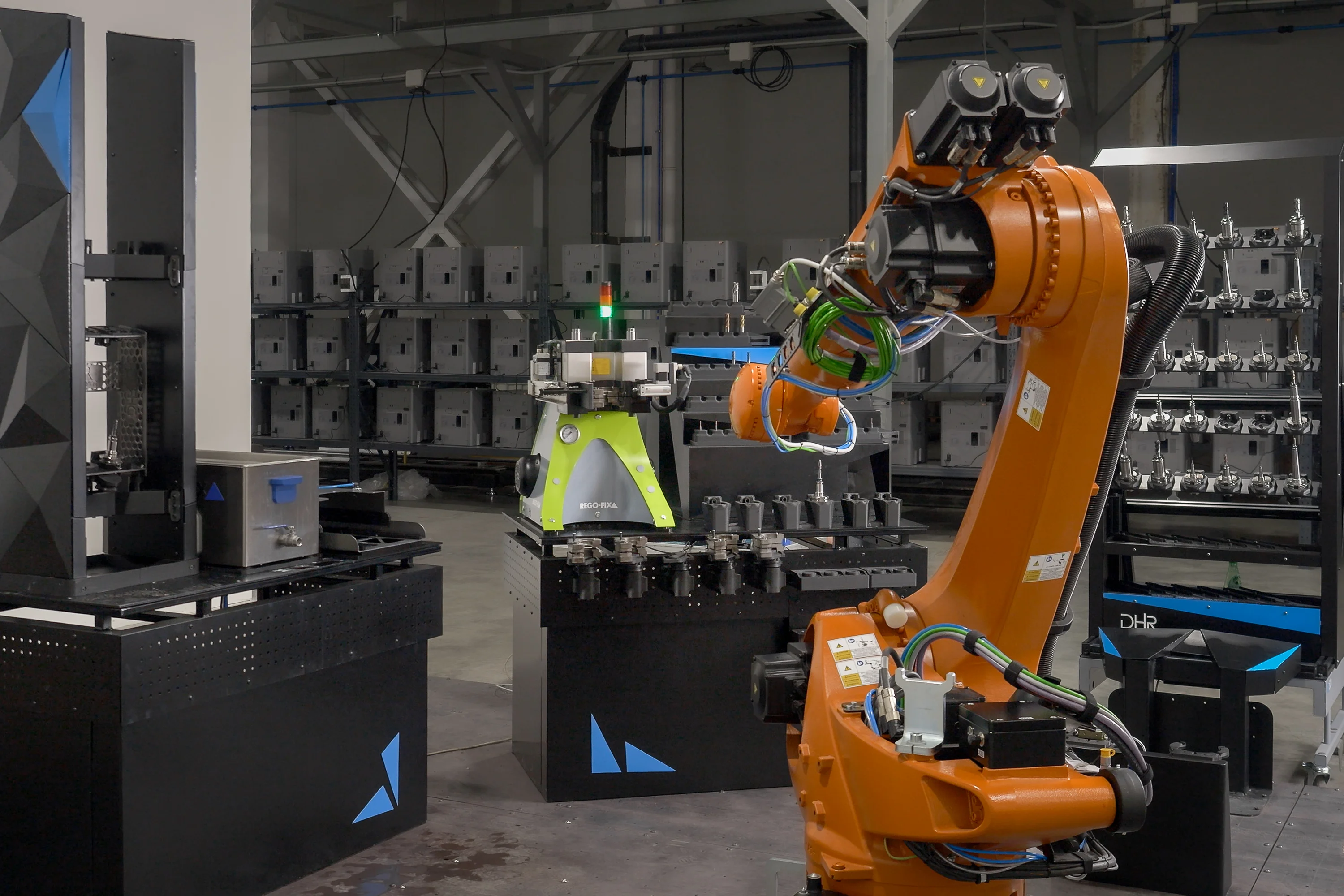
At DHR Engineering, we've been saying this for a while. It's why we build automated 3D print farms and end-to-end additive manufacturing automation systems. RAPID + TCT 2026 confirmed what we see in the field every day: additive manufacturing doesn't just want automation, it urgently needs it. Here's everything we observed and why it matters.
Drones and the Defense Imperative
The Most Important Application in the Room
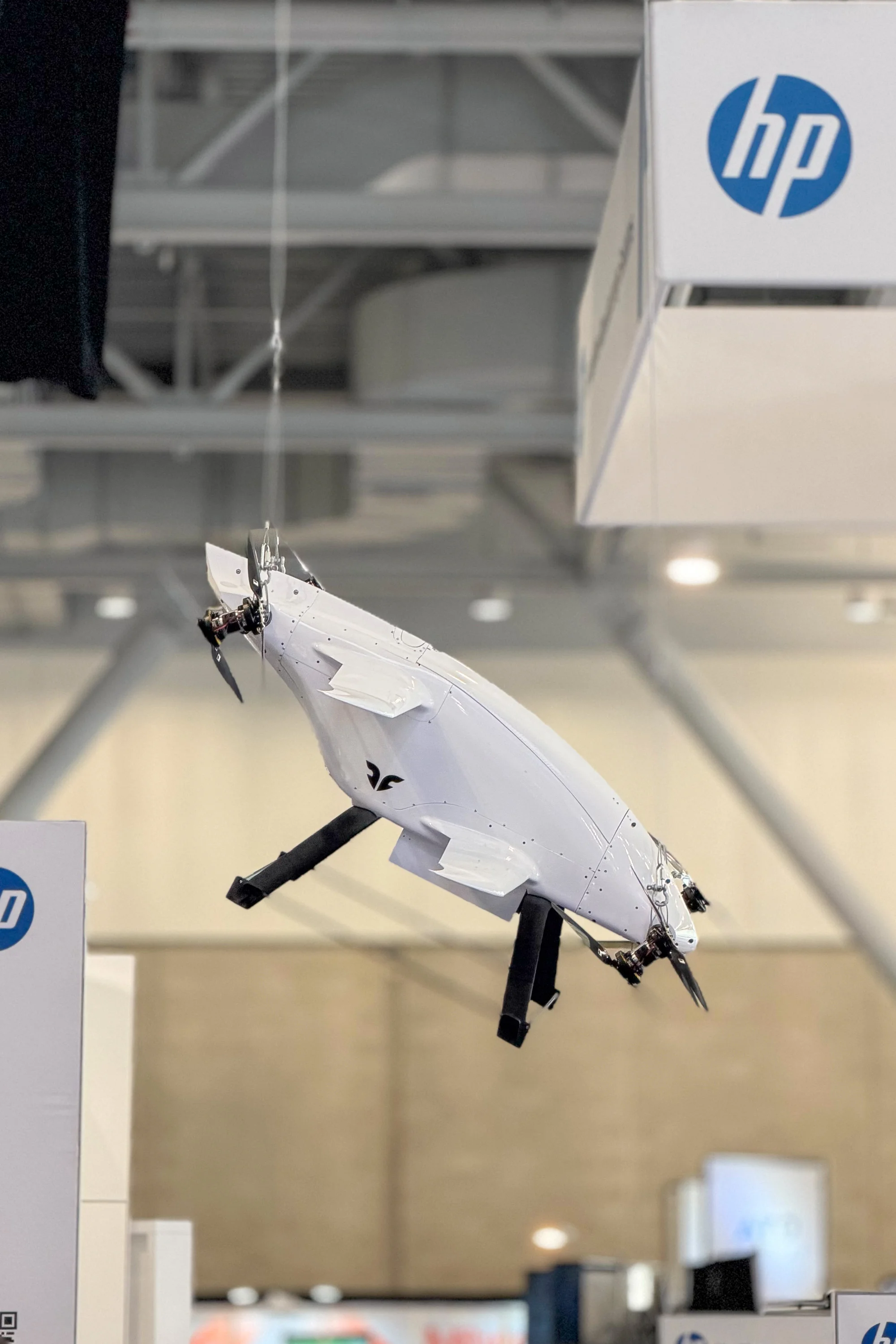
If there was one application thread running through every major defense conversation at RAPID + TCT 2026, it was unmanned aerial systems: drones. They were at OEM booths, in panel discussions, in the AeroDef showcases, and in casual conversations on the show floor. The message was unmistakable: 3D printing and defense are now inseparable, and drones are why.
The U.S. Department of Defense has taken notice at the budget level. The DoD's 2026 budget allocates $3.3 billion to additive manufacturing-related projects, an 83% increase from the prior year [^5][^6]. The number of DoD AM projects is estimated to have grown from approximately 1,200 to 2,100 in a single year [^6]. The global aerospace and defense AM market, valued at around $4.5 billion in 2025, is projected to reach $17.9 billion by 2032 [^7].
Ukraine Changed Everything
The conflict in Ukraine has become the world's most urgent real-world case study in additive manufacturing for defense production.
As Rob Ortiz of Formlabs presented at the AeroDef "From Need to Part in the Field: Drone Production on the Battlefield" knowledge bar session, United24, a Ukraine-based 3D printing drone operation, puts out one drone every 23 seconds. By limiting parts to simple fasteners, motors, batteries, electronics, and printed plastics, they have shrunk the supply chain to the point where the end product can be modified in as little as 48 hours [^17]. Ukraine's broader drone industry produced approximately 4 million drones of various types in 2025, with a target of 7 million in 2026, roughly doubling output every year since 2023 [^18]. What traditional manufacturing could never deliver in an active conflict zone, AM can: speed, adaptability, and local production.
As Arun Jeldi of Velo3D shared at the executive keynotes: "It's not about what the industry wants. It's about the customer. Solving real customer challenges, especially at the aerospace and defense and national security level, is what drives meaningful innovation forward." [^8]
Three Phases of Defense AM
The defense application of additive manufacturing is developing in stages that were each talked about at RAPID + TCT:
Today: Operational Printing. On-demand production of drone components and replacement parts without dependence on centralized supply chains. Traditional logistics cannot reach active conflict zones at the speed these applications require. AM can.
Tomorrow: Expeditionary Manufacturing. Rugged, containerized Forward Operating Manufacturing Facilities capable of operating off-grid, housing everything needed to print, assemble, and deploy. The U.S. Army has been testing portable 3D printing labs in remote locations, including Hawaii, where FPV drones are designed and assembled within hours [^6].
Beyond: Autonomous Fabrication. Just-in-time production at the point of need with minimal operator involvement. Reaching this stage is an automation problem as much as a hardware problem.
For a detailed look at the production economics involved, we covered drone manufacturing in depth here: Drone Manufacturing: Scaling Production and Cutting Costs with Automated 3D Printing.
Medical AM: Point of Care vs. Service Bureaus
One of the most nuanced and thoughtful panels at RAPID + TCT 2026 examined the medical and dental additive manufacturing landscape. The consensus from panelists, including leaders from 3D Systems, Materialise, HP, and Carbon, was that two fundamentally different production models will coexist for the foreseeable future: hospital-based point-of-care manufacturing and centralized service bureau production [^3][^9].
Both models have distinct strengths that match different clinical and commercial needs.
Point of Care: Printing Where the Patient Is
Point-of-care manufacturing refers to 3D printing performed inside hospitals and clinical facilities, close to or at the point of patient treatment. For example, Boston Children's Hospital, which presented at the Healthcare Showcase, has been using PolyJet anatomical models for pediatric surgical simulation [^9].
The clinical case for point-of-care is strongest in:
Surgical planning models: patient-specific anatomy printed hours before a procedure
Custom implants and prosthetics: particularly for trauma patients where standard sizing fails
Hearing aids, dental aligners, orthodontic models: high-volume, patient-specific production
Pediatric applications: where standard device sizes simply don't exist
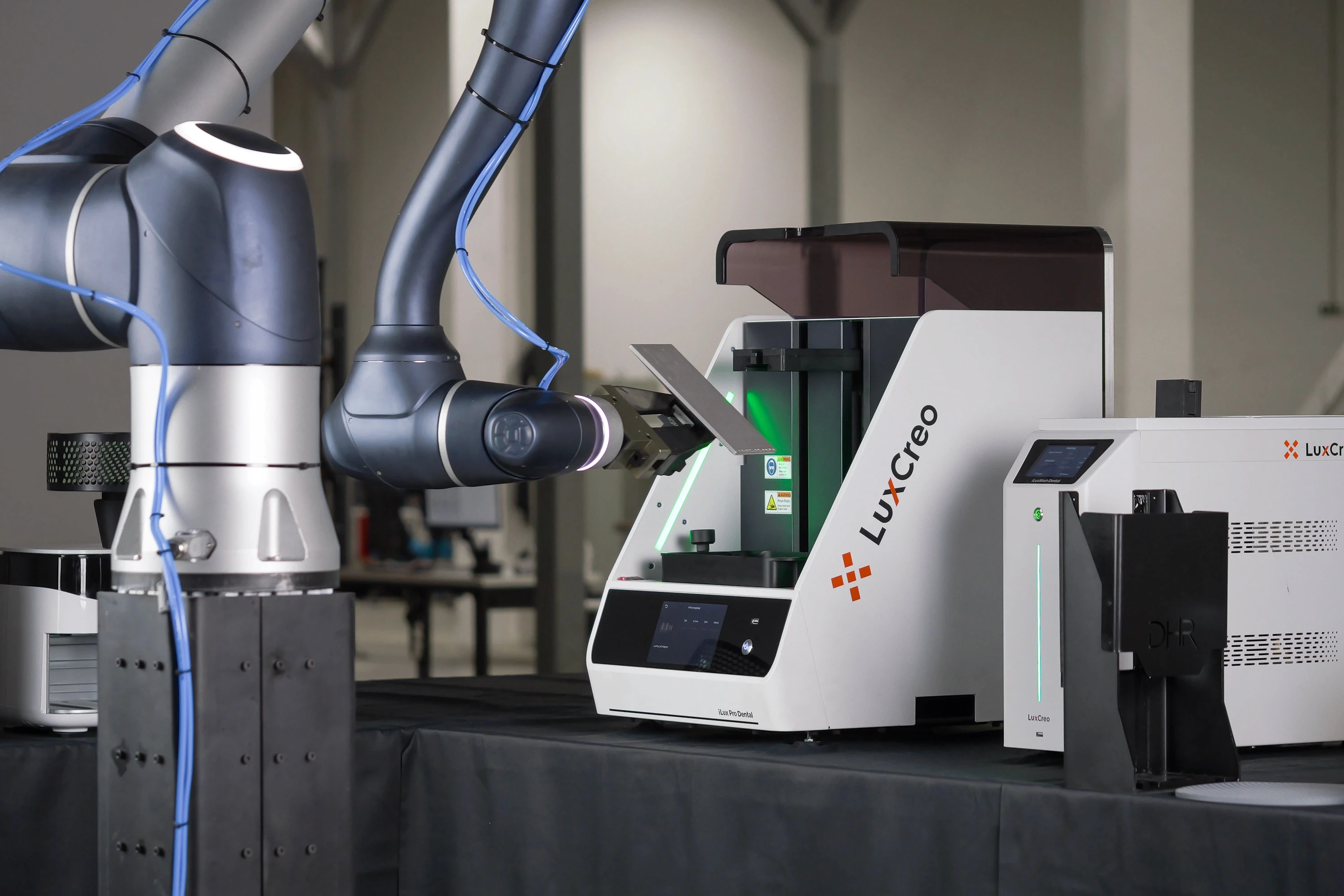
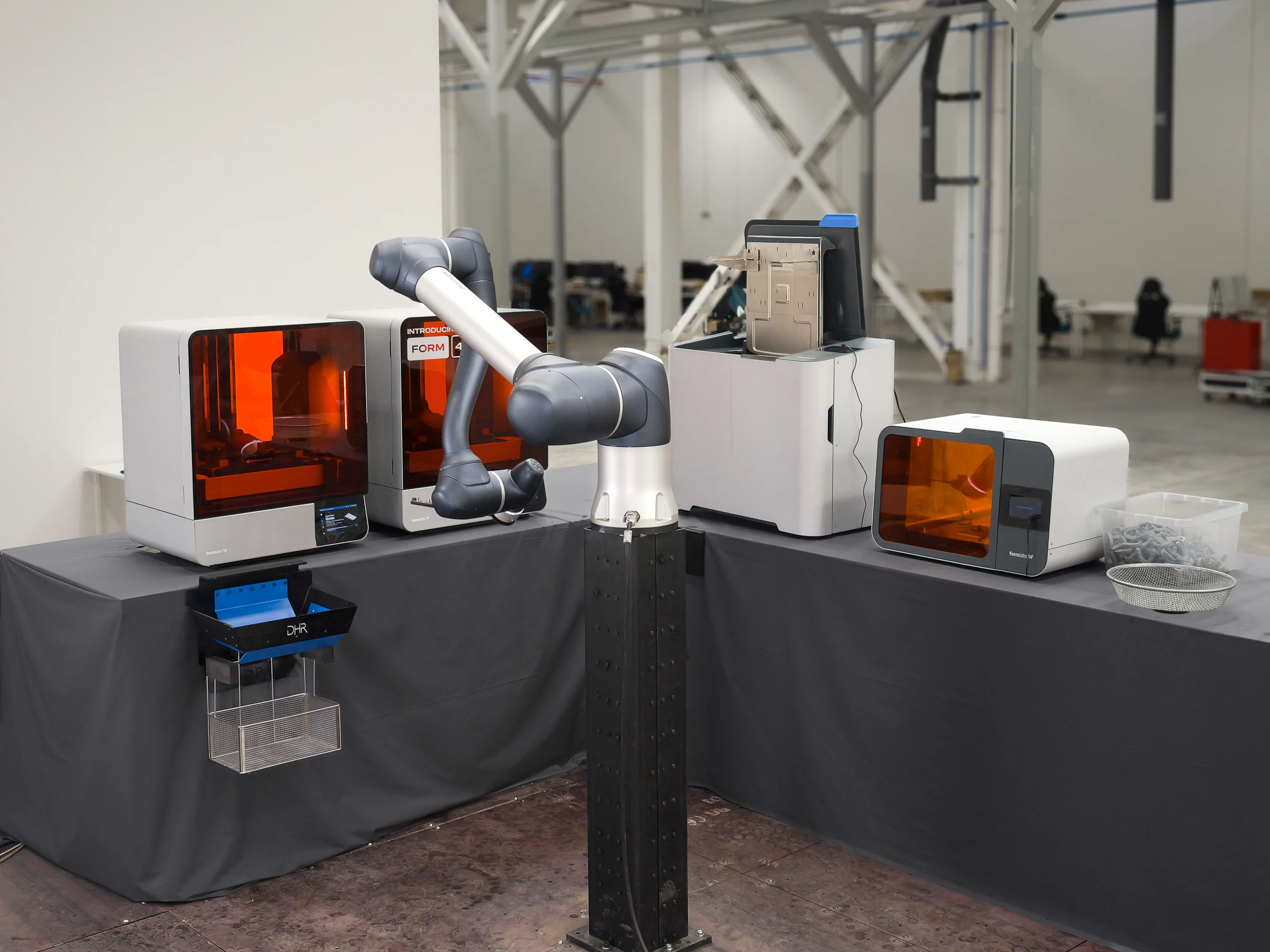
DHR Engineering has direct experience here. Our fully automated SLA printing workflow for dental aligner molds demonstrates exactly how point-of-care dental production can be systematized at scale, removing manual steps, improving consistency, and reducing cost per unit.
The panel's key message: lead with application, not with additive manufacturing. Hospitals want solutions to clinical problems, not printers. If you want adoption in a hospital, you show outcomes first and technology second.
Service Bureaus: Scale and Breadth
Service bureaus, on the other hand, are built for breadth. High-mix facilities with many technologies like FDM, SLA, SLS, MJF, metal LPBF, can serve a vast range of on-demand, rapid prototyping, and low-volume production requests.
For medical device manufacturers that need clinical-grade quality at production volumes like implants, surgical instruments, disposables, the service bureau model offers certification infrastructure, quality management systems, and capacity that hospitals simply can't replicate internally.
The panel consensus: the best medical AM outcomes happen when clinicians, medical device OEMs, and manufacturing partners collaborate early. Applications should drive the technology selection, not the other way around.
The War Wound Problem and the Case for Customization
One observation from the medical panel was a direct connection between defense and medical manufacturing: for example, victims of war in Ukraine requiring secondary surgeries.
Initial battlefield treatment, often performed under duress, leaves injuries that require corrective procedures back home. Patient-specific surgical tools and implants, produced via additive manufacturing from CT scan data, could enable better first-intervention outcomes. Customization at the point of first care is not a luxury. In this context, it's a clinical necessity.
This is where medical AM's core strength becomes most visible. As one panelist observed: "Medical is proof of customization at scale." Hearing aids produced by the millions, dental aligners in hundreds of millions of patient-specific units, bone implants that match individual anatomy: these are not niche products. They're proof points that additive manufacturing can deliver personalized production at industrial volume.
The Next Big Unlock for 3D Printing Is Automation
The Productivity Gap No One Talks About
Here's a challenge that came up repeatedly at RAPID + TCT, often candidly and sometimes between the lines: the machines are getting too good for their own workflows.
Consider what's happening simultaneously:
Build speeds are accelerating (EOS M4 ONYX: +50% throughput [^12])
Material quality is improving (real silicone, superalloys, high-performance polymers [^14][^16])
Application demand is surging (defense, medical, consumer, automotive)
Hardware costs are dropping (HP MJF 1200 under $60K [^10])
And yet, the labor model hasn't changed. Most additive manufacturing facilities still rely on operators to manually remove parts, prepare beds, manage queues, and handle post-processing. At low volumes, this is fine. But as throughput increases, this becomes the dominant bottleneck.
The shorter the build cycle, the more attention a machine demands. The more machines in a facility, the more operators you need. Without automation, scaling additive manufacturing means scaling headcount, which is expensive, inconsistent, and increasingly difficult.
What Automation Actually Solves
The economic case for additive manufacturing automation is straightforward. A properly designed automated production cell allows one operator to manage multiple machines simultaneously, maintains consistent handling that reduces scrap, and runs through second and third shifts without proportional labor increases.
Machine availability. An automated system can clear a build, prepare the platform, and restart a job without waiting for an operator shift.
Cost per part. Labor is one of the highest variable costs in additive production. Automating the operator touchpoints like part removal, bed preparation, and especially post-processing handoff, directly reduces cost per unit. In metal LPBF workflows specifically, post-processing, including support removal, heat treatment, and surface finishing, can account for up to 50% of total part cost [^5]. For a facility running dozens of printers, the savings compound significantly.
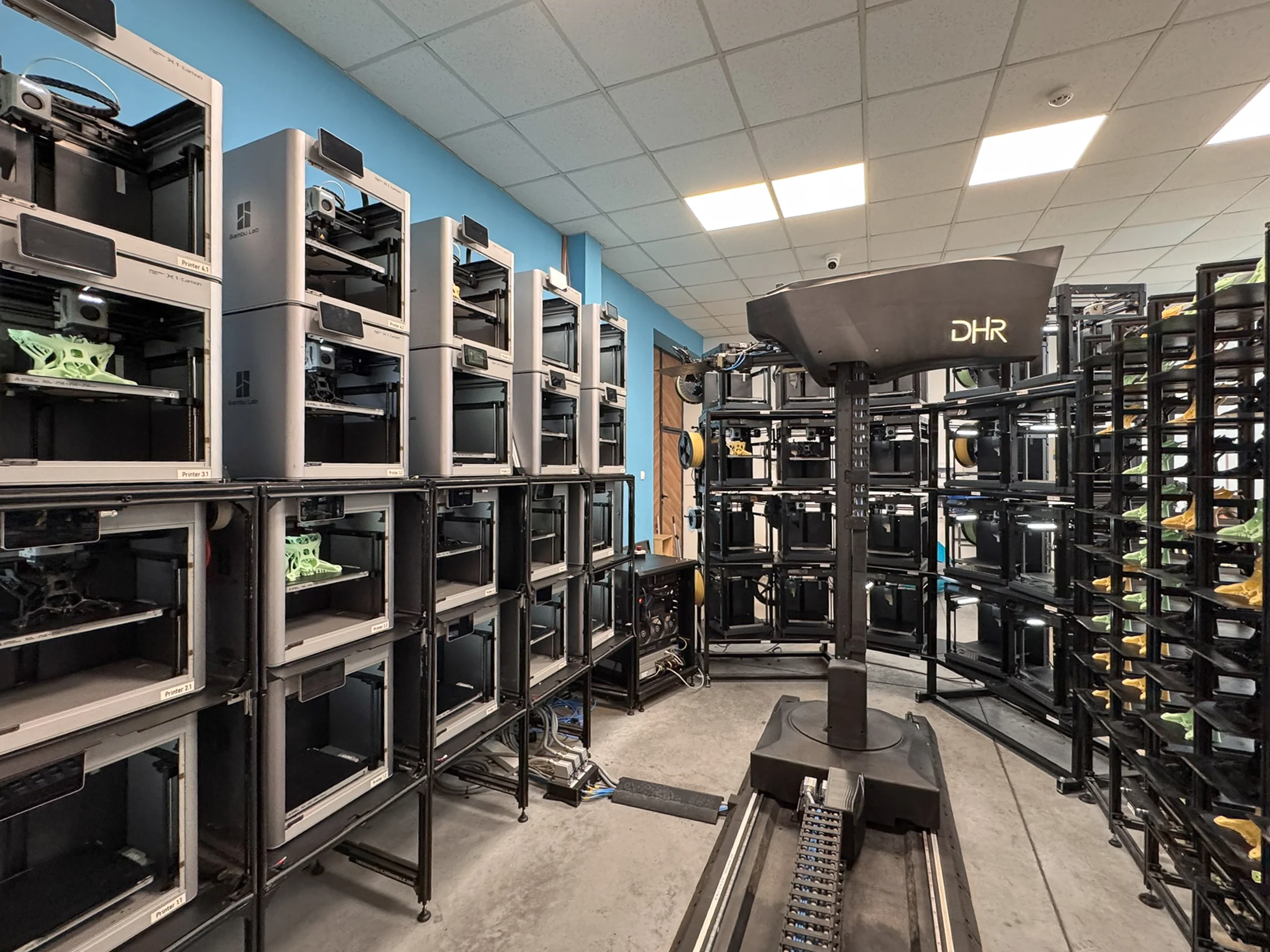
Real numbers from the field. At DHR's own 44-machine FDM print farm, the entire operation requires just one operator hour per 24 hours of machine runtime. That's not a projection: it's what we run. On the MJF side, automated inter-cycle cleaning, covering recoaters, optics, glass surfaces, and ink residuals, saves 45 minutes of manual labor per cycle. That figure is field-validated by an HP customer. Across a multi-shift operation running multiple machines, those minutes compound fast.
Consistency. Human operators vary. Automated systems don't. Consistent part removal, consistent post-processing conditions, consistent quality checks, which are all critical for ISO compliance and defense qualification.
Scalability without proportional headcount. The whole promise of additive manufacturing for defense and medical is distributed, on-demand production. That only works at scale if you can run a facility with a small, highly skilled team rather than a large manual labor force.
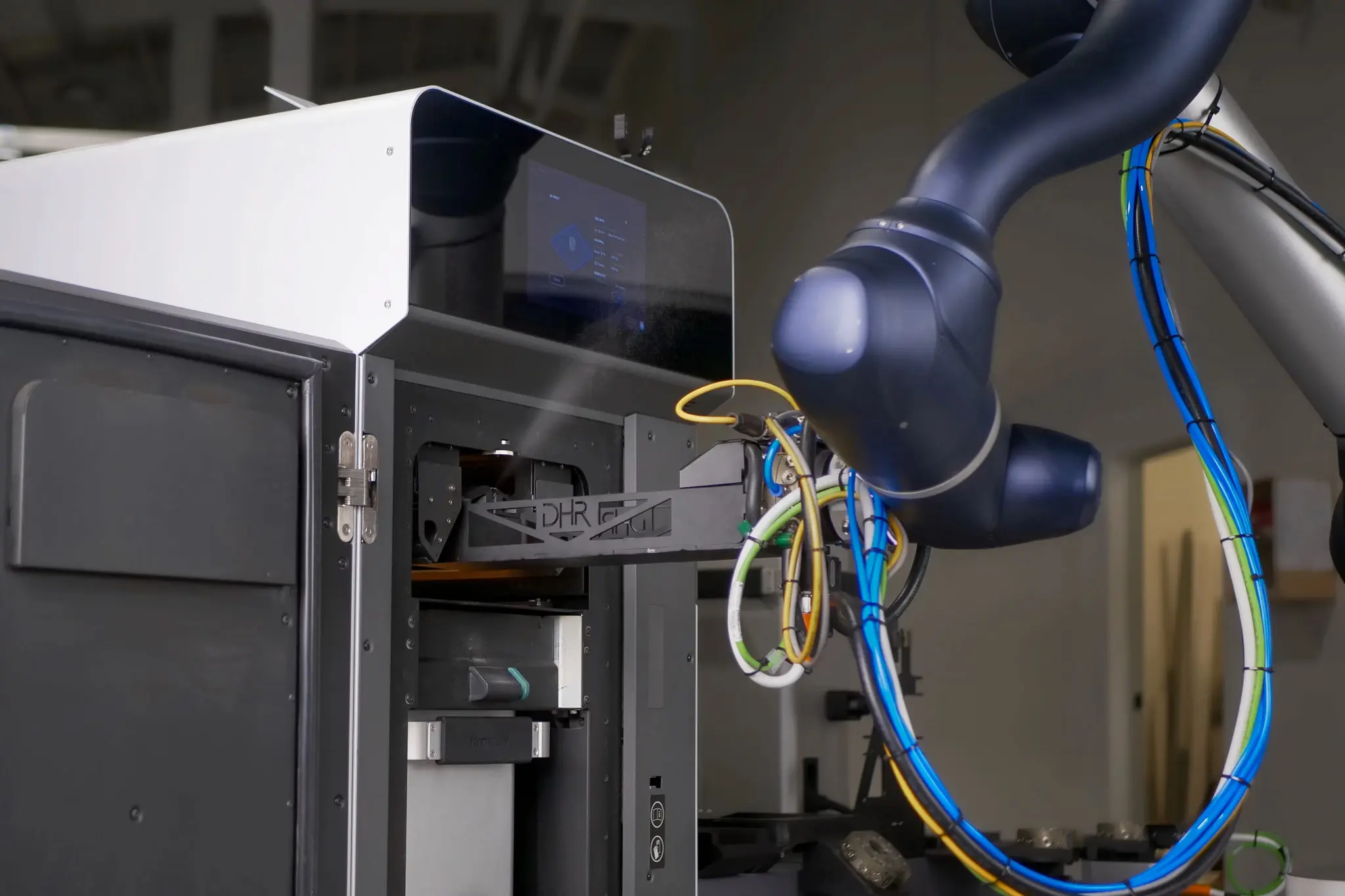
We've designed and deployed these systems across FDM, SLA, and SLS platforms. Our SLS automation expansion using optical and sensor maintenance on the Formlabs Fuse 1 is a good example of what's possible when you treat the printer as one node in an automated production cell, not as a standalone device.
You Don't Have to Reinvent the Wheel
One of the most important messages we took away from RAPID + TCT: companies entering production-scale additive manufacturing don't need to figure out automation from scratch.
The panel discussions, and our own experience, make the case clearly. The learning curve for building automated additive workflows is steep: custom hardware, trained teams, deep R&D. Most companies printing at scale for defense or medical applications need to be focused on their core competency: the product, the application, the customer.
Automation is an infrastructure problem. It's what we specialize in.
As panelists across multiple sessions emphasized: if you're new to AM at scale, don't start with which printer to buy, start with what the whole system needs to look like. End-to-end thinking from day one determines whether a production cell is profitable or whether it becomes a permanent source of operational headaches.
DHR Engineering builds industrial automation systems for additive manufacturing. Whether you're running a 3D print farm, scaling drone component production, or building a dental or medical AM workflow, we can help you design the end-to-end system that makes production economics work. Explore our services or see our projects.
FAQ: Additive Manufacturing, Automation, and What RAPID + TCT 2026 Means for Your Operation
RAPID + TCT 2026: Boston Sets the Stage for Industrial AM
The Industry's Focus Has Shifted to Production
RAPID + TCT made its long-awaited debut in Boston this April, and the choice of venue was no accident [^1]. The city's dense cluster of life sciences companies, robotics startups, aerospace research institutions, and AI labs made it a natural home for an event that has been evolving from a 3D printing showcase into a serial manufacturing summit [^2].
With over 450 exhibitors, 168 technical presentations, and more than 200 expert speakers, including leaders from NASA, the U.S. Army, Boeing, and major OEMs, the 2026 edition was the most industrially focused RAPID in the event's three-decade history [^3][^4]. The overarching narrative was clear: the industry has moved from "capability" to "production."
As one analysis of the event put it, the 2026 landscape is defined not by a "race for speed" but by material mastery, process reliability, and the economic justification of AM in serial manufacturing environments [^5]. The machines can do the work. The question is whether the systems around them can keep up.
Hardware Is Getting Faster, Which Creates a Workflow Problem
Walk the RAPID + TCT show floor and you'll see generation-over-generation speed improvements everywhere. EOS launched the M4 ONYX, a six-laser metal LPBF system delivering up to 50% higher throughput with up to 97% uptime commitment and approximately 30% cost reduction per part compared to predecessor systems [^12][^13]. HP launched the MJF 1200, a more compact, accessible Multi Jet Fusion system designed to bring industrial-grade polymer production to smaller workshops and decentralized labs, priced under $60,000 [^10]. 3D Systems' new SLA 825 Dual achieves 30% faster print speeds using a dual-laser configuration, targeted directly at high-utilization aerospace and investment casting environments [^11].
What does it mean when a machine can print a part in a fraction of the time it once could?
It means operators need to be there more often. Removing parts, starting new builds, checking quality, preparing the next job. The math becomes uncomfortable quickly. As build times shorten, and they are shortening fast, the human labor loop around the printer becomes the dominant constraint on throughput.
This was one of the most candid conversations we had at the show. Shorter layer times and faster machines mean you need someone at the printer every 10 to 15 minutes in high-throughput environments. Without automation, you're not scaling production, you're scaling headcount.
Kristin Mulherin, Director of Additive Manufacturing Technology at Hubbell, put it plainly at one of the show floor panels:
"Automation (and good software) is everything."
At DHR Engineering, we've been saying this for a while. It's why we build automated 3D print farms and end-to-end additive manufacturing automation systems. RAPID + TCT 2026 confirmed what we see in the field every day: additive manufacturing doesn't just want automation, it urgently needs it. Here's everything we observed and why it matters.
Drones and the Defense Imperative
The Most Important Application in the Room
If there was one application thread running through every major defense conversation at RAPID + TCT 2026, it was unmanned aerial systems: drones. They were at OEM booths, in panel discussions, in the AeroDef showcases, and in casual conversations on the show floor. The message was unmistakable: 3D printing and defense are now inseparable, and drones are why.
The U.S. Department of Defense has taken notice at the budget level. The DoD's 2026 budget allocates $3.3 billion to additive manufacturing-related projects, an 83% increase from the prior year [^5][^6]. The number of DoD AM projects is estimated to have grown from approximately 1,200 to 2,100 in a single year [^6]. The global aerospace and defense AM market, valued at around $4.5 billion in 2025, is projected to reach $17.9 billion by 2032 [^7].
Ukraine Changed Everything
The conflict in Ukraine has become the world's most urgent real-world case study in additive manufacturing for defense production.
As Rob Ortiz of Formlabs presented at the AeroDef "From Need to Part in the Field: Drone Production on the Battlefield" knowledge bar session, United24, a Ukraine-based 3D printing drone operation, puts out one drone every 23 seconds. By limiting parts to simple fasteners, motors, batteries, electronics, and printed plastics, they have shrunk the supply chain to the point where the end product can be modified in as little as 48 hours [^17]. Ukraine's broader drone industry produced approximately 4 million drones of various types in 2025, with a target of 7 million in 2026, roughly doubling output every year since 2023 [^18]. What traditional manufacturing could never deliver in an active conflict zone, AM can: speed, adaptability, and local production.
As Arun Jeldi of Velo3D shared at the executive keynotes: "It's not about what the industry wants. It's about the customer. Solving real customer challenges, especially at the aerospace and defense and national security level, is what drives meaningful innovation forward." [^8]
Three Phases of Defense AM
The defense application of additive manufacturing is developing in stages that were each talked about at RAPID + TCT:
Today: Operational Printing. On-demand production of drone components and replacement parts without dependence on centralized supply chains. Traditional logistics cannot reach active conflict zones at the speed these applications require. AM can.
Tomorrow: Expeditionary Manufacturing. Rugged, containerized Forward Operating Manufacturing Facilities capable of operating off-grid, housing everything needed to print, assemble, and deploy. The U.S. Army has been testing portable 3D printing labs in remote locations, including Hawaii, where FPV drones are designed and assembled within hours [^6].
Beyond: Autonomous Fabrication. Just-in-time production at the point of need with minimal operator involvement. Reaching this stage is an automation problem as much as a hardware problem.
For a detailed look at the production economics involved, we covered drone manufacturing in depth here: Drone Manufacturing: Scaling Production and Cutting Costs with Automated 3D Printing.
Medical AM: Point of Care vs. Service Bureaus
One of the most nuanced and thoughtful panels at RAPID + TCT 2026 examined the medical and dental additive manufacturing landscape. The consensus from panelists, including leaders from 3D Systems, Materialise, HP, and Carbon, was that two fundamentally different production models will coexist for the foreseeable future: hospital-based point-of-care manufacturing and centralized service bureau production [^3][^9].
Both models have distinct strengths that match different clinical and commercial needs.
Point of Care: Printing Where the Patient Is
Point-of-care manufacturing refers to 3D printing performed inside hospitals and clinical facilities, close to or at the point of patient treatment. For example, Boston Children's Hospital, which presented at the Healthcare Showcase, has been using PolyJet anatomical models for pediatric surgical simulation [^9].
The clinical case for point-of-care is strongest in:
Surgical planning models: patient-specific anatomy printed hours before a procedure
Custom implants and prosthetics: particularly for trauma patients where standard sizing fails
Hearing aids, dental aligners, orthodontic models: high-volume, patient-specific production
Pediatric applications: where standard device sizes simply don't exist
DHR Engineering has direct experience here. Our fully automated SLA printing workflow for dental aligner molds demonstrates exactly how point-of-care dental production can be systematized at scale, removing manual steps, improving consistency, and reducing cost per unit.
The panel's key message: lead with application, not with additive manufacturing. Hospitals want solutions to clinical problems, not printers. If you want adoption in a hospital, you show outcomes first and technology second.
Service Bureaus: Scale and Breadth
Service bureaus, on the other hand, are built for breadth. High-mix facilities with many technologies like FDM, SLA, SLS, MJF, metal LPBF, can serve a vast range of on-demand, rapid prototyping, and low-volume production requests.
For medical device manufacturers that need clinical-grade quality at production volumes like implants, surgical instruments, disposables, the service bureau model offers certification infrastructure, quality management systems, and capacity that hospitals simply can't replicate internally.
The panel consensus: the best medical AM outcomes happen when clinicians, medical device OEMs, and manufacturing partners collaborate early. Applications should drive the technology selection, not the other way around.
The War Wound Problem and the Case for Customization
One observation from the medical panel was a direct connection between defense and medical manufacturing: for example, victims of war in Ukraine requiring secondary surgeries.
Initial battlefield treatment, often performed under duress, leaves injuries that require corrective procedures back home. Patient-specific surgical tools and implants, produced via additive manufacturing from CT scan data, could enable better first-intervention outcomes. Customization at the point of first care is not a luxury. In this context, it's a clinical necessity.
This is where medical AM's core strength becomes most visible. As one panelist observed: "Medical is proof of customization at scale." Hearing aids produced by the millions, dental aligners in hundreds of millions of patient-specific units, bone implants that match individual anatomy: these are not niche products. They're proof points that additive manufacturing can deliver personalized production at industrial volume.
The Next Big Unlock for 3D Printing Is Automation
The Productivity Gap No One Talks About
Here's a challenge that came up repeatedly at RAPID + TCT, often candidly and sometimes between the lines: the machines are getting too good for their own workflows.
Consider what's happening simultaneously:
Build speeds are accelerating (EOS M4 ONYX: +50% throughput [^12])
Material quality is improving (real silicone, superalloys, high-performance polymers [^14][^16])
Application demand is surging (defense, medical, consumer, automotive)
Hardware costs are dropping (HP MJF 1200 under $60K [^10])
And yet, the labor model hasn't changed. Most additive manufacturing facilities still rely on operators to manually remove parts, prepare beds, manage queues, and handle post-processing. At low volumes, this is fine. But as throughput increases, this becomes the dominant bottleneck.
The shorter the build cycle, the more attention a machine demands. The more machines in a facility, the more operators you need. Without automation, scaling additive manufacturing means scaling headcount, which is expensive, inconsistent, and increasingly difficult.
What Automation Actually Solves
The economic case for additive manufacturing automation is straightforward. A properly designed automated production cell allows one operator to manage multiple machines simultaneously, maintains consistent handling that reduces scrap, and runs through second and third shifts without proportional labor increases.
Machine availability. An automated system can clear a build, prepare the platform, and restart a job without waiting for an operator shift.
Cost per part. Labor is one of the highest variable costs in additive production. Automating the operator touchpoints like part removal, bed preparation, and especially post-processing handoff, directly reduces cost per unit. In metal LPBF workflows specifically, post-processing, including support removal, heat treatment, and surface finishing, can account for up to 50% of total part cost [^5]. For a facility running dozens of printers, the savings compound significantly.
Real numbers from the field. At DHR's own 44-machine FDM print farm, the entire operation requires just one operator hour per 24 hours of machine runtime. That's not a projection: it's what we run. On the MJF side, automated inter-cycle cleaning, covering recoaters, optics, glass surfaces, and ink residuals, saves 45 minutes of manual labor per cycle. That figure is field-validated by an HP customer. Across a multi-shift operation running multiple machines, those minutes compound fast.
Consistency. Human operators vary. Automated systems don't. Consistent part removal, consistent post-processing conditions, consistent quality checks, which are all critical for ISO compliance and defense qualification.
Scalability without proportional headcount. The whole promise of additive manufacturing for defense and medical is distributed, on-demand production. That only works at scale if you can run a facility with a small, highly skilled team rather than a large manual labor force.
We've designed and deployed these systems across FDM, SLA, and SLS platforms. Our SLS automation expansion using optical and sensor maintenance on the Formlabs Fuse 1 is a good example of what's possible when you treat the printer as one node in an automated production cell, not as a standalone device.
You Don't Have to Reinvent the Wheel
One of the most important messages we took away from RAPID + TCT: companies entering production-scale additive manufacturing don't need to figure out automation from scratch.
The panel discussions, and our own experience, make the case clearly. The learning curve for building automated additive workflows is steep: custom hardware, trained teams, deep R&D. Most companies printing at scale for defense or medical applications need to be focused on their core competency: the product, the application, the customer.
Automation is an infrastructure problem. It's what we specialize in.
As panelists across multiple sessions emphasized: if you're new to AM at scale, don't start with which printer to buy, start with what the whole system needs to look like. End-to-end thinking from day one determines whether a production cell is profitable or whether it becomes a permanent source of operational headaches.
DHR Engineering builds industrial automation systems for additive manufacturing. Whether you're running a 3D print farm, scaling drone component production, or building a dental or medical AM workflow, we can help you design the end-to-end system that makes production economics work. Explore our services or see our projects.
FAQ: Additive Manufacturing, Automation, and What RAPID + TCT 2026 Means for Your Operation
References
[^1]: SME & Rapid News Publications. RAPID + TCT Sets Strategic Direction, Releases Schedule for 2024-26 Events. rapid3devent.com
[^2]: SME & Rapid News Publications. RAPID + TCT 2026 Event Overview. rapid3devent.com
[^3]: 3Dnatives. RAPID + TCT 2026: What to Know Before You Go. 3dnatives.com
[^4]: SME & Rapid News Publications. RAPID + TCT 2026 Conference Overview. rapid3devent.com
[^5]: 3D Adept Media. RAPID + TCT 2026 Preview: What to Expect in Boston. 3dadept.com
[^6]: SME & Rapid News Publications. The Expanding Role of Additive Manufacturing in the Defense Industrial Base. rapid3devent.com
[^7]: 3Dnatives. Inside RAPID + TCT 2026: Exhibitors You Can't Miss. 3dnatives.com
[^8]: 3DPrint.com. At RAPID + TCT 2026, Executive Keynotes Break Down What's Next for AM. 3dprint.com
[^9]: 3Dnatives. RAPID + TCT 2026: What to Know Before You Go. 3dnatives.com
[^10]: All3DP. We Found 7 Game-Changing 3D Printers at Rapid + TCT 2026. all3dp.com
[^11]: GlobeNewswire. 3D Systems Accelerates Production-Scale Additive Manufacturing with New High-Throughput Platform and Next-Generation Factory Software. globenewswire.com
[^12]: EOS GmbH. EOS M4 ONYX Product Page. eos.info
[^13]: Metal AM Magazine. EOS M4 ONYX: Exploring a Customer-Led Path to Scaling Series Metal Additive Manufacturing. metal-am.com
[^14]: TCT Magazine. RAPID + TCT 2026 Exhibitor Highlights. tctmagazine.com
[^15]: RAPID + TCT. Exhibitor Spotlight: How Carbon Is Scaling Additive Production in Consumer Goods. rapid3devent.com
[^16]: Inovar Communications. Metal AM Spring 2026. issuu.com
[^17]: Ortiz, Rob. From Need to Part in the Field: Drone Production on the Battlefield. AeroDef Knowledge Bar, RAPID + TCT 2026. Boston, MA.
[^18]: EuroMaidan Press. Ukraine Aims to Build 7 Million Drones in 2026 — 70 Times More Than the US.euromaidanpress.com