March 25, 2026
Outside the Factory: The Untapped World of Outdoor Robotics
Heavy industry has a problem that robots are uniquely positioned to solve. The most dangerous jobs in the world, the ones involving rotating machinery, suspended loads, and remote locations, are still done by hand. Outdoor robotics exists to change that. It's one of the least talked-about fields in industrial engineering, and one of the most consequential.
Heavy industry has a problem that robots are uniquely positioned to solve. The most dangerous jobs in the world, the ones involving rotating machinery, suspended loads, and remote locations, are still done by hand. Outdoor robotics exists to change that. It's one of the least talked-about fields in industrial engineering, and one of the most consequential.
Outdoor Robotics
Industrial Automation
Outdoor Robotics
Industrial Automation
Table of Contents
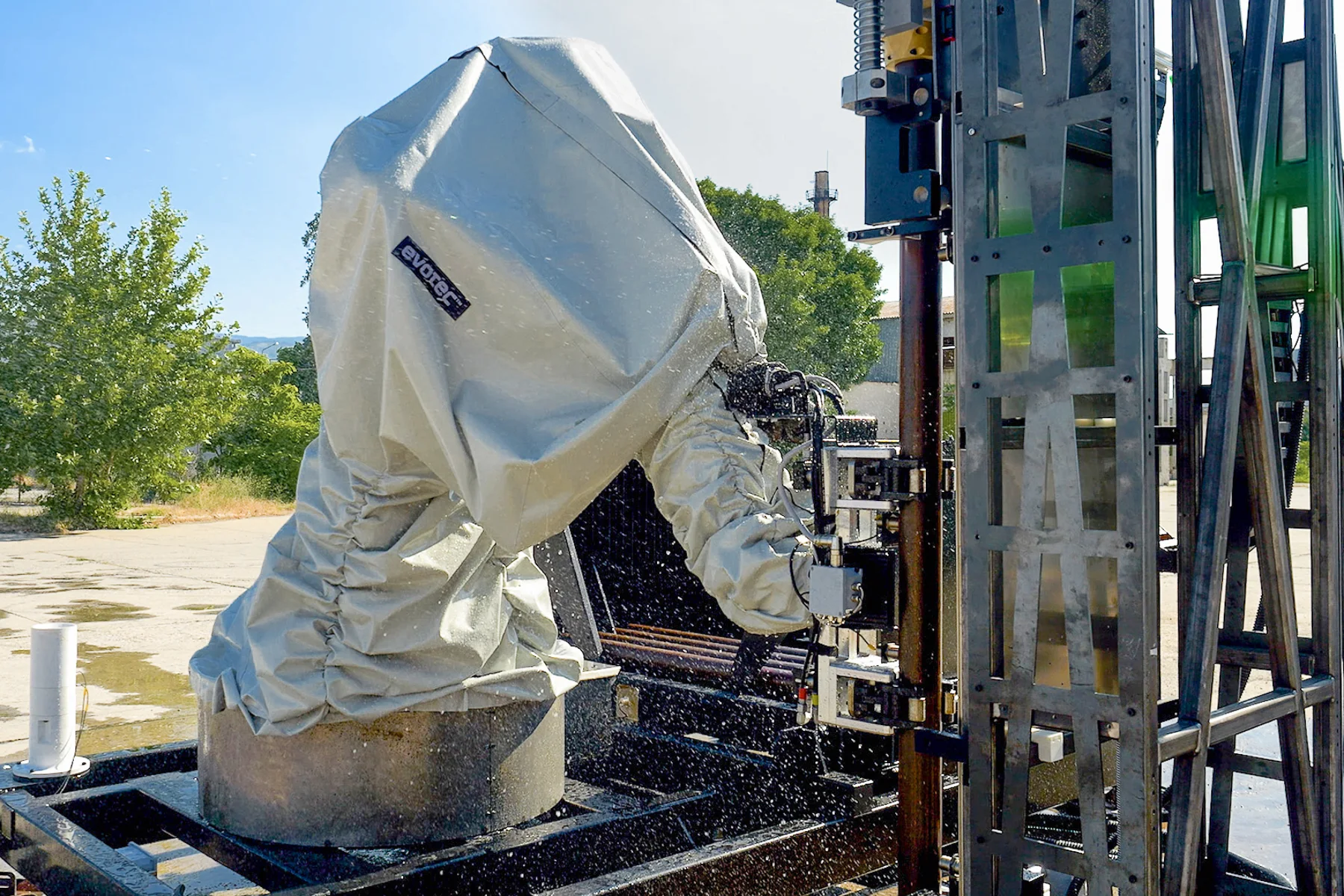
the landscape
Beyond the Factory Floor: Why Outdoor Robotics Is No Longer Optional
Most people picture robots in climate-controlled factories, repeating precise tasks on level floors with every variable engineered away in advance. That version of automation is mature, well-funded, and well-understood. But a different and more demanding kind is gaining ground: robots that operate in the open air, far from any controlled environment, in conditions that would stop most industrial machines cold.
The industries that need them most are mining, oil and gas, and construction. They share a common profile: physically dangerous, repetitive, labor-intensive work in places humans find difficult or hazardous to operate in for extended periods. They also share a set of compounding problems - a workforce that is disappearing, rising pressure to operate more cleanly and sustainably, and a world that simultaneously needs more from them than ever before.
Mining is where all three pressures converge most sharply. According to a 2023 Deloitte report on mining and metals trends, nearly 50% of mining engineers will reach retirement age within the next decade, with overall US mining employment having already fallen over 20% in the past decade.[^1] Congressional testimony before the House Committee on Natural Resources put the US-specific crisis in starker terms: more than half the current US mining workforce, approximately 221,000 workers, is expected to retire by 2029.[^2]
50% | 221K | 70% |
|---|---|---|
of mining engineers expected to retire within the decade, Deloitte Mining Trends, 2023 | US mining workers projected to retire by 2029, House Committee on Natural Resources, 2023 | of people aged 15–30 say they would not consider working in mining, McKinsey & Company, 2023 |
The world needs more minerals, extracted faster, from harder-to-reach locations, to build the batteries, turbines, and infrastructure a low-carbon economy requires. The western push to build independent critical mineral supply chains depends on people who increasingly do not exist in sufficient numbers. A 2023 McKinsey & Company global survey found that 70% of respondents aged 15 to 30 said they "definitely wouldn't" or "probably wouldn't" consider working in the mining industry - the lowest appeal rating of any sector surveyed, with only 4% saying they "definitely would."[^3]
The pipeline is not thinning. It is nearly empty. Automation is not just a convenient answer — it is the only structurally realistic one.
A single operator managing multiple automated rigs from a distance does more than replace headcount. It changes what is possible in locations where recruiting a full crew takes months and asking people to work manually carries genuine physical risk.
The Safety Case
Safety as the Design Brief, Not the Afterthought
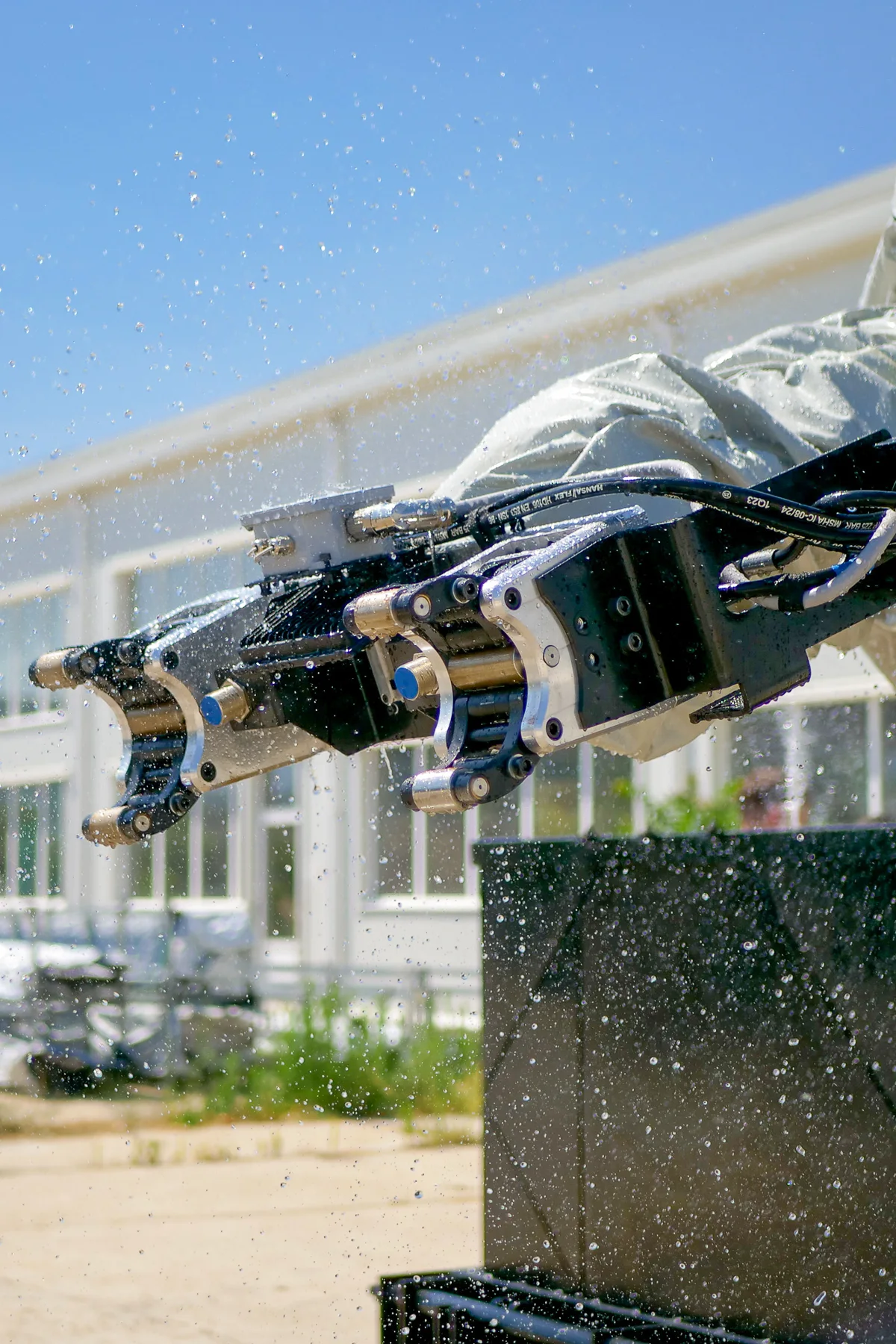
In mature indoor automation, safety is often a constraint layered onto a system designed primarily around throughput. Guards, interlocks, and emergency stops are added to protect workers from a machine that was built to do a job. In outdoor robotics applied to heavy industry, that logic typically runs in reverse. The reason the robot exists, in many cases, is to remove people from an environment where serious injury is a regular occurrence and existing safety measures have reached their practical limit.
⚠ Safety Data
According to the International Labour Organization, mining employs around 1% of the global workforce yet accounts for approximately 8% of all fatal occupational injuries worldwide, roughly 15,000 deaths per year.[^4] Research citing NIOSH data confirms that drilling contractors face fatality rates 11 times the US all-industry average.[^5]
That disproportionate toll is not the result of neglect. The industry has invested heavily in safety procedures, training, and equipment for decades. And yet, according to the International Council on Mining and Metals (ICMM), fatalities among its member companies rose for the second consecutive year in 2024, reaching 42 deaths - up from 36 in 2023 and 33 in 2022.[^6] After years of gradual improvement, the trend has reversed. It is a signal that procedural safety, on its own, has a ceiling.
The injury data shows exactly why. According to the CDC's National Institute for Occupational Safety and Health (NIOSH), over 40% of the most serious injuries in mining, fatalities and permanent disabilities, are classified as struck-by or caught-in machinery accidents.[^7] These incidents happen because the work requires people to stand close to heavy, fast-moving equipment for extended periods, in remote locations, across long shifts where fatigue compounds every risk. No procedure fully protects a person in that position indefinitely.
That is where automation changes the equation. When the goal is to move people out of hazardous zones entirely, rather than manage their exposure more carefully, the design brief shifts fundamentally.
The Engineering
Why Outdoor Robotic Systems Are Hard to Build
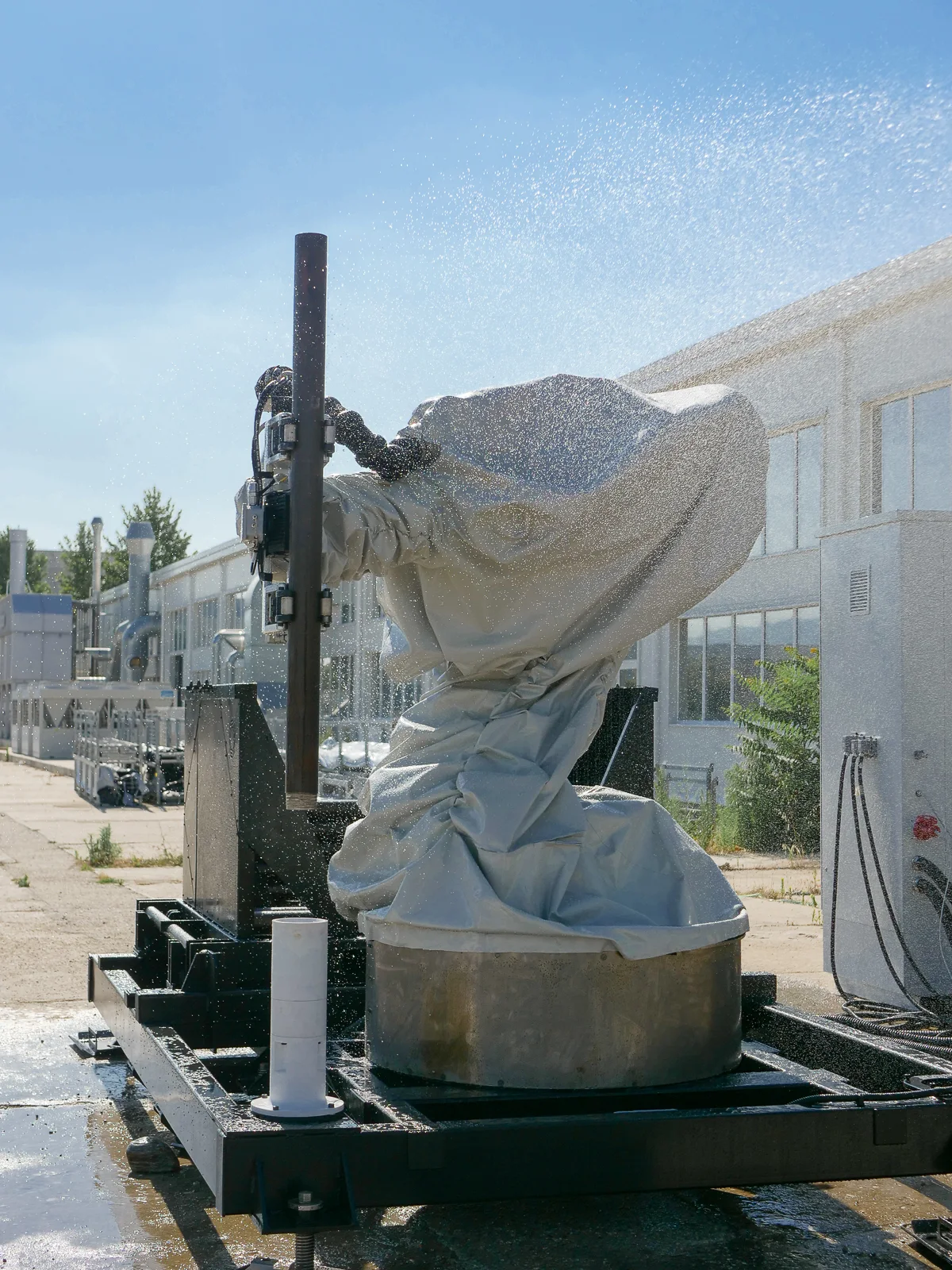
A welding robot on a factory floor benefits from years of precise, stable calibration. The lighting does not change. The floor does not shift. The temperature holds within a predictable range, and the machine can be set up once and trusted to perform consistently for thousands of cycles. Outdoor robotics starts from the opposite assumption: the environment will not cooperate, and the system has to be built to handle that from day one.
Vision | Visual systems that perform flawlessly indoors are continuously stressed by shifting sunlight, shadows, reflections, and dust in outdoor environments. |
Terrain | Ground conditions change underfoot. No two field deployments share the same surface stability or geometry. |
Thermal | Temperature swings exceeding 40°C between morning and afternoon put sustained pressure on electronics, seals, and structural components. |
Ingress | Debris finds its way into connectors. UV exposure degrades materials that would last indefinitely indoors. Wind loads destabilize systems calibrated for still air. |
Uptime | There is no robotics technician standing by. The system must troubleshoot, adapt, and continue operating without human intervention. |
The engineering challenge of outdoor robotics is solving all of them simultaneously, in a system that still needs to perform its primary task with precision, over extended operating cycles. This is why the gap between a functional prototype and a genuinely field-ready outdoor robot tends to be wider than most people expect. Building something that works once in good conditions is a fundamentally different problem from building something that works consistently in all of the conditions you actually encounter.
In practice
Outdoor Robotics for Safer, Faster Mineral Exploration
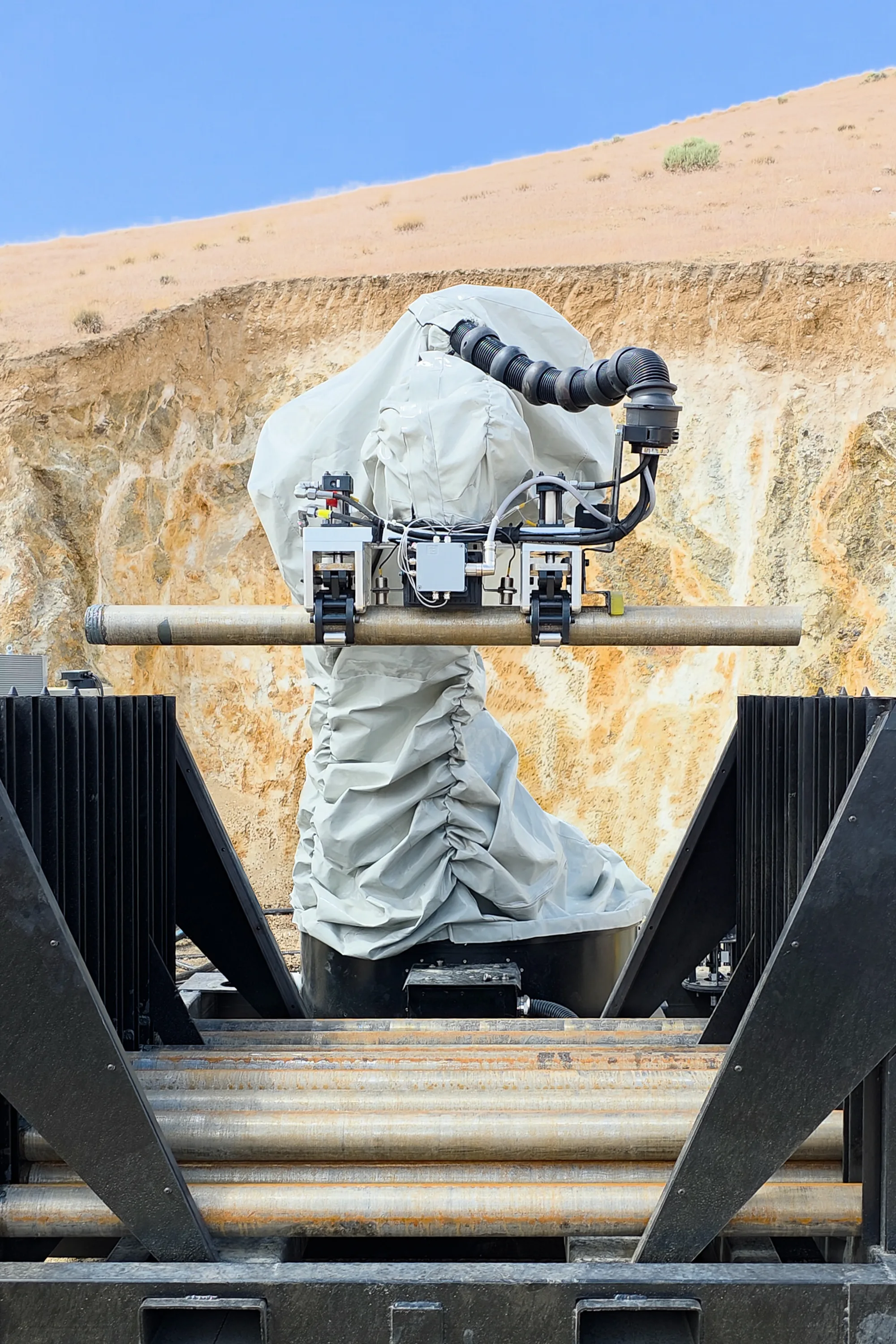
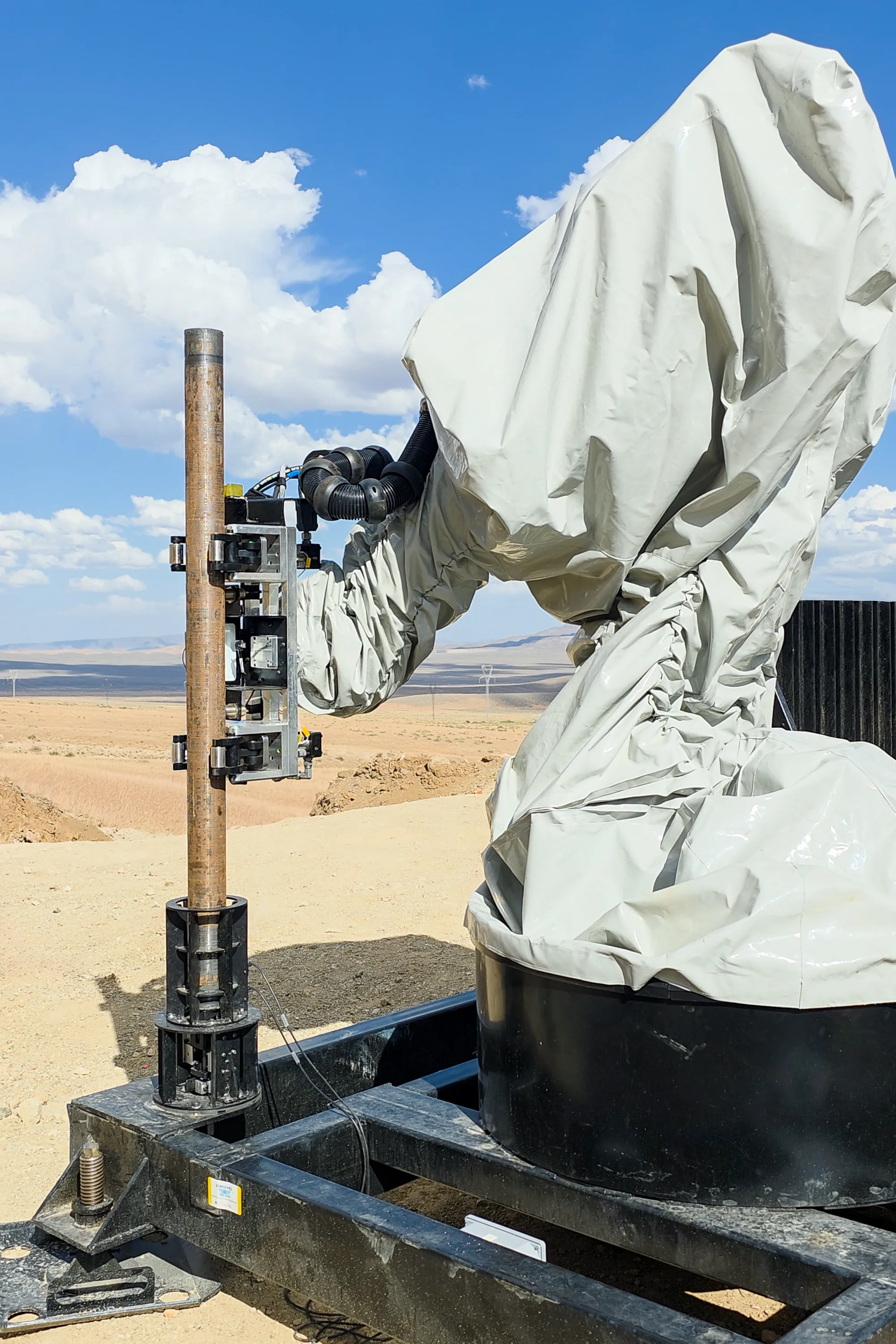
DHR Engineering had the opportunity to face and solve these challenges directly in 2025 on an automated rod handling system for a gold exploration rig in Nevada.
Mineral exploration is how companies locate the copper, lithium, nickel, and rare earths that modern supply chains depend on. The process involves drilling deep into rock and extracting core samples for analysis. At the center of that process is rod handling: workers manually positioning heavy steel drill rods alongside high-speed rotating equipment, repeatedly, throughout a shift, in remote locations where skilled labor is difficult to find and retain. The drilling zone carries well-recognized "line of fire" risk, with exposure to pinch points, suspended loads, and spinning components on every cycle.
Case Study: Automated Rod Handling System - Nevada
DHR designed and deployed a custom rod handling system with integrated robotic arm that removes workers from that zone entirely. The system autonomously retrieves rods from a storage container, positions them for calibration, and inserts them into the drill string without requiring a person to enter the hazard area. Drilling continues uninterrupted. The positional accuracy required is tight; even small alignment errors can result in stripped threads and unplanned downtime, so the gripping mechanism and localization algorithm were engineered to meet the precision demands of the process even with the ground shifting underneath the robot on an hourly basis.
The deployment environment added a layer of complexity that tested every aspect of the outdoor robotics engineering brief. The Nevada desert offers extreme temperature variation, persistent dust, and high winds. DHR built the system with weather-resistant enclosures, robust mechanical components, and protective design throughout to maintain continuous 24/7 operation under those conditions. The full project ran from initial design to field deployment in just 6 months.
6mo | 24/7 | 0 |
|---|---|---|
Design and engineering to field deployment | Continuous operation in outdoor conditions | Workers required in the drilling hazard zone |
The result addresses the three core challenges of outdoor robotic deployment at once: reliable operation in an uncontrolled environment, the precision the application demands, and the removal of workers from the most dangerous part of the process. That combination, functional under harsh environmental conditions and genuinely safe by design, is what the field of outdoor robotics increasingly demands, and what ambitious engineering can deliver.
FAQ
Frequently Asked Questions on Outdoor Robotics
the landscape
Beyond the Factory Floor: Why Outdoor Robotics Is No Longer Optional
Most people picture robots in climate-controlled factories, repeating precise tasks on level floors with every variable engineered away in advance. That version of automation is mature, well-funded, and well-understood. But a different and more demanding kind is gaining ground: robots that operate in the open air, far from any controlled environment, in conditions that would stop most industrial machines cold.
The industries that need them most are mining, oil and gas, and construction. They share a common profile: physically dangerous, repetitive, labor-intensive work in places humans find difficult or hazardous to operate in for extended periods. They also share a set of compounding problems - a workforce that is disappearing, rising pressure to operate more cleanly and sustainably, and a world that simultaneously needs more from them than ever before.
Mining is where all three pressures converge most sharply. According to a 2023 Deloitte report on mining and metals trends, nearly 50% of mining engineers will reach retirement age within the next decade, with overall US mining employment having already fallen over 20% in the past decade.[^1] Congressional testimony before the House Committee on Natural Resources put the US-specific crisis in starker terms: more than half the current US mining workforce, approximately 221,000 workers, is expected to retire by 2029.[^2]
50% | 221K | 70% |
|---|---|---|
of mining engineers expected to retire within the decade, Deloitte Mining Trends, 2023 | US mining workers projected to retire by 2029, House Committee on Natural Resources, 2023 | of people aged 15–30 say they would not consider working in mining, McKinsey & Company, 2023 |
The world needs more minerals, extracted faster, from harder-to-reach locations, to build the batteries, turbines, and infrastructure a low-carbon economy requires. The western push to build independent critical mineral supply chains depends on people who increasingly do not exist in sufficient numbers. A 2023 McKinsey & Company global survey found that 70% of respondents aged 15 to 30 said they "definitely wouldn't" or "probably wouldn't" consider working in the mining industry - the lowest appeal rating of any sector surveyed, with only 4% saying they "definitely would."[^3]
The pipeline is not thinning. It is nearly empty. Automation is not just a convenient answer — it is the only structurally realistic one.
A single operator managing multiple automated rigs from a distance does more than replace headcount. It changes what is possible in locations where recruiting a full crew takes months and asking people to work manually carries genuine physical risk.
The Safety Case
Safety as the Design Brief, Not the Afterthought
In mature indoor automation, safety is often a constraint layered onto a system designed primarily around throughput. Guards, interlocks, and emergency stops are added to protect workers from a machine that was built to do a job. In outdoor robotics applied to heavy industry, that logic typically runs in reverse. The reason the robot exists, in many cases, is to remove people from an environment where serious injury is a regular occurrence and existing safety measures have reached their practical limit.
⚠ Safety Data
According to the International Labour Organization, mining employs around 1% of the global workforce yet accounts for approximately 8% of all fatal occupational injuries worldwide, roughly 15,000 deaths per year.[^4] Research citing NIOSH data confirms that drilling contractors face fatality rates 11 times the US all-industry average.[^5]
That disproportionate toll is not the result of neglect. The industry has invested heavily in safety procedures, training, and equipment for decades. And yet, according to the International Council on Mining and Metals (ICMM), fatalities among its member companies rose for the second consecutive year in 2024, reaching 42 deaths - up from 36 in 2023 and 33 in 2022.[^6] After years of gradual improvement, the trend has reversed. It is a signal that procedural safety, on its own, has a ceiling.
The injury data shows exactly why. According to the CDC's National Institute for Occupational Safety and Health (NIOSH), over 40% of the most serious injuries in mining, fatalities and permanent disabilities, are classified as struck-by or caught-in machinery accidents.[^7] These incidents happen because the work requires people to stand close to heavy, fast-moving equipment for extended periods, in remote locations, across long shifts where fatigue compounds every risk. No procedure fully protects a person in that position indefinitely.
That is where automation changes the equation. When the goal is to move people out of hazardous zones entirely, rather than manage their exposure more carefully, the design brief shifts fundamentally.
The Engineering
Why Outdoor Robotic Systems Are Hard to Build
A welding robot on a factory floor benefits from years of precise, stable calibration. The lighting does not change. The floor does not shift. The temperature holds within a predictable range, and the machine can be set up once and trusted to perform consistently for thousands of cycles. Outdoor robotics starts from the opposite assumption: the environment will not cooperate, and the system has to be built to handle that from day one.
Vision | Visual systems that perform flawlessly indoors are continuously stressed by shifting sunlight, shadows, reflections, and dust in outdoor environments. |
Terrain | Ground conditions change underfoot. No two field deployments share the same surface stability or geometry. |
Thermal | Temperature swings exceeding 40°C between morning and afternoon put sustained pressure on electronics, seals, and structural components. |
Ingress | Debris finds its way into connectors. UV exposure degrades materials that would last indefinitely indoors. Wind loads destabilize systems calibrated for still air. |
Uptime | There is no robotics technician standing by. The system must troubleshoot, adapt, and continue operating without human intervention. |
The engineering challenge of outdoor robotics is solving all of them simultaneously, in a system that still needs to perform its primary task with precision, over extended operating cycles. This is why the gap between a functional prototype and a genuinely field-ready outdoor robot tends to be wider than most people expect. Building something that works once in good conditions is a fundamentally different problem from building something that works consistently in all of the conditions you actually encounter.
In practice
Outdoor Robotics for Safer, Faster Mineral Exploration
DHR Engineering had the opportunity to face and solve these challenges directly in 2025 on an automated rod handling system for a gold exploration rig in Nevada.
Mineral exploration is how companies locate the copper, lithium, nickel, and rare earths that modern supply chains depend on. The process involves drilling deep into rock and extracting core samples for analysis. At the center of that process is rod handling: workers manually positioning heavy steel drill rods alongside high-speed rotating equipment, repeatedly, throughout a shift, in remote locations where skilled labor is difficult to find and retain. The drilling zone carries well-recognized "line of fire" risk, with exposure to pinch points, suspended loads, and spinning components on every cycle.
Case Study: Automated Rod Handling System - Nevada
DHR designed and deployed a custom rod handling system with integrated robotic arm that removes workers from that zone entirely. The system autonomously retrieves rods from a storage container, positions them for calibration, and inserts them into the drill string without requiring a person to enter the hazard area. Drilling continues uninterrupted. The positional accuracy required is tight; even small alignment errors can result in stripped threads and unplanned downtime, so the gripping mechanism and localization algorithm were engineered to meet the precision demands of the process even with the ground shifting underneath the robot on an hourly basis.
The deployment environment added a layer of complexity that tested every aspect of the outdoor robotics engineering brief. The Nevada desert offers extreme temperature variation, persistent dust, and high winds. DHR built the system with weather-resistant enclosures, robust mechanical components, and protective design throughout to maintain continuous 24/7 operation under those conditions. The full project ran from initial design to field deployment in just 6 months.
6mo | 24/7 | 0 |
|---|---|---|
Design and engineering to field deployment | Continuous operation in outdoor conditions | Workers required in the drilling hazard zone |
The result addresses the three core challenges of outdoor robotic deployment at once: reliable operation in an uncontrolled environment, the precision the application demands, and the removal of workers from the most dangerous part of the process. That combination, functional under harsh environmental conditions and genuinely safe by design, is what the field of outdoor robotics increasingly demands, and what ambitious engineering can deliver.
FAQ
Frequently Asked Questions on Outdoor Robotics
References
[^1]: Deloitte. Tracking the Trends 2023: The Top 10 Issues Shaping Mining in the Year Ahead. Deloitte Insights, 2023. Reported via Mining.com: mining.com
[^2]: Walter Copan, Colorado School of Mines. Testimony before the U.S. House Committee on Natural Resources, June 2023. Cited in: "Mining Industry Dogged by Retirements and Lack of New Recruits." Mining.com, 2024. mining.com
[^3]: McKinsey & Company. Has Mining Lost Its Luster? Why Talent Is Moving Elsewhere and How to Bring Them Back. February 2023. Cited by ICMM: icmm.com
[^4]: International Labour Organization (ILO). Mining safety statistics. Cited in: Nowrouzi-Kia, B. et al. "Occupational Accidents in Mining Workers." BMJ Open, 2024. pmc.ncbi.nlm.nih.gov
[^5]: Blackley, D.J. et al. "Injury Rates on New and Old Technology Oil and Gas Rigs." American Journal of Industrial Medicine, 57(10), 2014. pmc.ncbi.nlm.nih.gov
[^6]:International Council on Mining and Metals (ICMM). Safety Performance: Benchmarking Progress of ICMM Company Members in 2024. July 2025. Reported via Mining.com: mining.com
[^7]: CDC / NIOSH. "Mining and Machinery Struck-by Injuries." Groves, W. et al. "Machine-Related Injuries in the US Mining Industry." Accident Analysis & Prevention, 2010. pubmed.ncbi.nlm.nih.gov