November 26, 2026
Formnext 2026 Recap: Why Metal AM Series Production Needs Automation
A year after meeting ATLIX at Formnext 2025, we returned to Frankfurt with a robotic cell that automates the xBUILD 3000 and ran it live for all four days of the show. Watch our interview with the CEOs of ATLIX and DHR, and see what the news from Formnext 2026 says about automation and metal AM series production.
A year after meeting ATLIX at Formnext 2025, we returned to Frankfurt with a robotic cell that automates the xBUILD 3000 and ran it live for all four days of the show. Watch our interview with the CEOs of ATLIX and DHR, and see what the news from Formnext 2026 says about automation and metal AM series production.
Events
Metal AM
Industrial Automation
Events
Industrial Automation
Metal AM
Table of Contents

Interview with Matthias Himmelsbach (CEO, ATLIX) and Dimitar Hristakiev (CEO, DHR Engineering) at Formnext 2026. Quotes are taken from the full interview and lightly edited for clarity.
From a first meeting at Formnext 2025 to a live concept demo a year later
A year ago at Formnext, we met the team at ATLIX, the industrial metal additive manufacturing company formerly known as TRUMPF Additive Manufacturing. We talked about a shared goal: removing the manual steps that keep laser powder bed fusion (LPBF) printers idle between builds. This November, at Formnext 2026, we came back to Messe Frankfurt with the result.
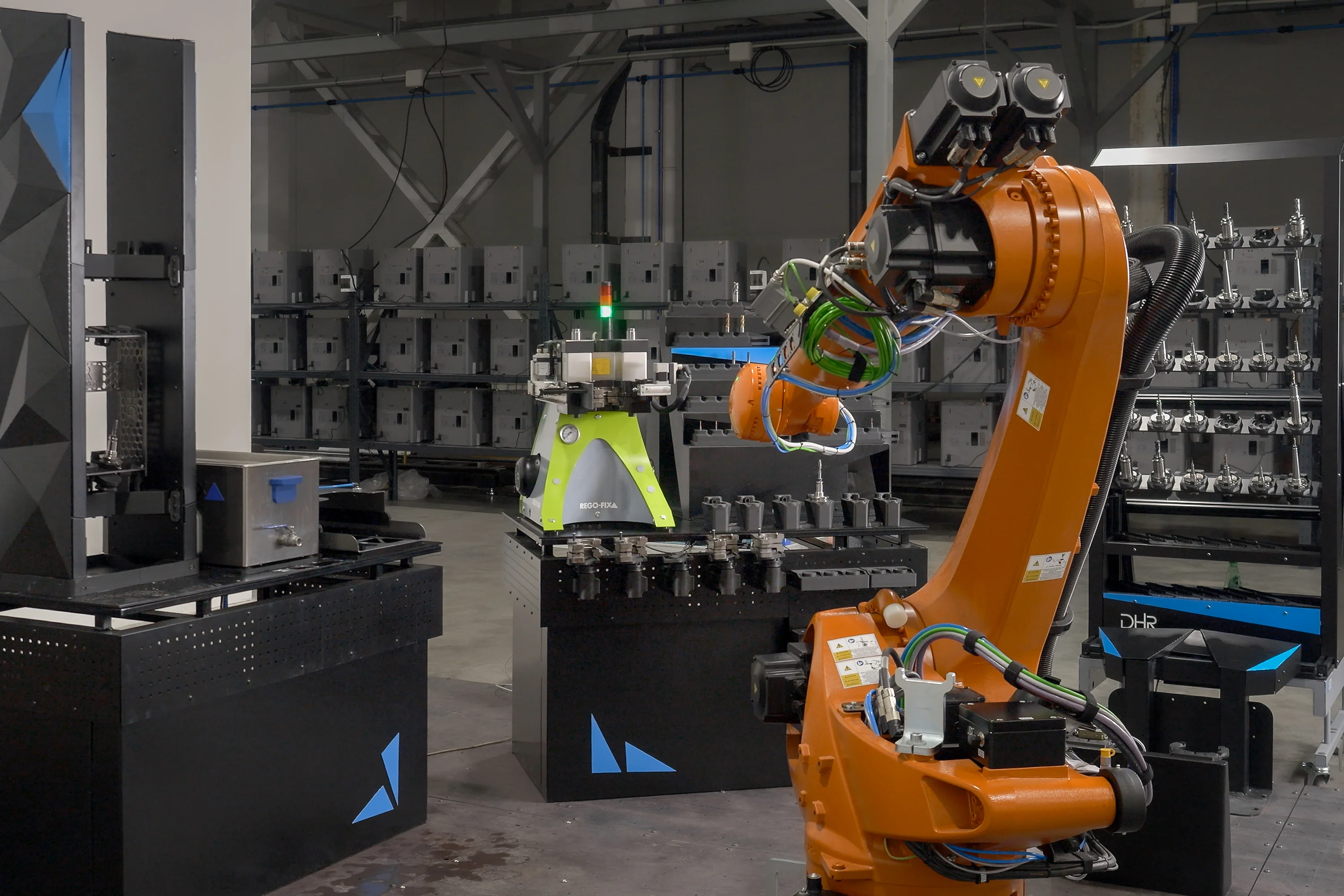
Installed by our team at the ATLIX booth in Hall 12, the robotic automation cell, paired with the xBUILD 3000, ran for all four days of the show. Instead of renders or a roadmap, visitors could watch the concept demonstration running live on the show floor.
The booth was busy throughout the week. Other companies in the industry brought their own customers to show them what automated metal printing can look like, which says a lot about where demand is heading.
The collaboration was covered in dedicated articles by VoxelMatters, Metal AM and 3Druck.com,[^1][^2][^3] and featured in Formnext previews and news roundups by 3D Printing Industry, 3DPrint.com and TCT Magazine,[^4][^5] which selected the automated xBUILD 3000 concept cell as one of 12 new technologies it highlighted from Formnext 2026.[^6]
“We were looking for a partner for this kind of integration, and a year ago we met at Formnext and started a discussion. The experience DHR brings in this field led us to start a joint project. We were very impressed with DHR's speed and expertise in our collaboration over the past year.” Matthias Himmelsbach, CEO, ATLIX
During the show, Matthias Himmelsbach, CEO of ATLIX, and Dimitar Hristakiev, CEO of DHR Engineering, joined us in front of the cell to discuss the engineering behind it, the economics of high-volume metal printing and what comes next.

Engineering for up to 98% utilization: inside and outside the ATLIX xBUILD 3000
Metal powder bed fusion can produce complex parts, such as internal cooling channels and lightweight lattice structures, that are expensive or impossible to machine. Yet in standard production setups, manufacturers report losing up to a third of their potential machine time while builds cool, get unpacked and are depowdered.
A metal printer only produces while its lasers are working. Every hour a finished build waits for an operator is lost output. For ATLIX, solving this meant looking beyond the build chamber:
"ATLIX stands for industrial additive manufacturing. What does that mean? First of all, repeatability: you need to get the same results out of the machine, consistently. Then productivity: continuously increasing machine utilization to bring down the cost per part for our customers. But it's not just about the machine. It's about integrating it into the larger process, and this is where DHR comes in." Matthias Himmelsbach, CEO, ATLIX
For this project, we automated the workflow both inside and outside the xBUILD 3000.[^5] The machine's removable build cylinders, closed powder system, up to two lasers and 300 × 300 × 400 mm build volume gave the automation a stable, predictable base.
"The xBUILD 3000 is an extremely reliable, very precise machine with consistent quality. That's the cornerstone we need to automate the process. Once the machine is reliable enough, automation is what brings out its full utilization potential: up to 98%." Dimitar Hristakiev, CEO, DHR Engineering
How DHR’s custom automation eliminates idle time
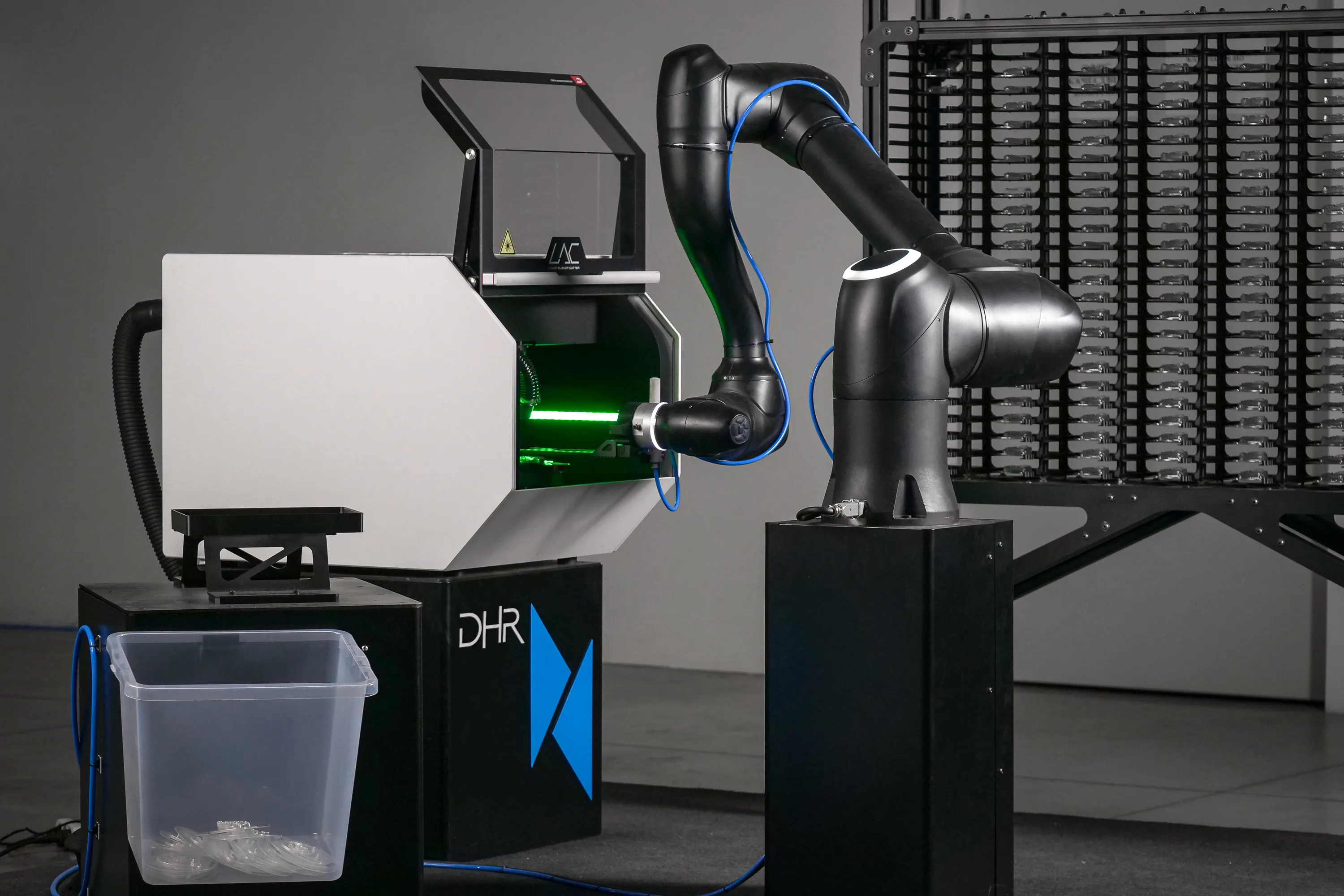
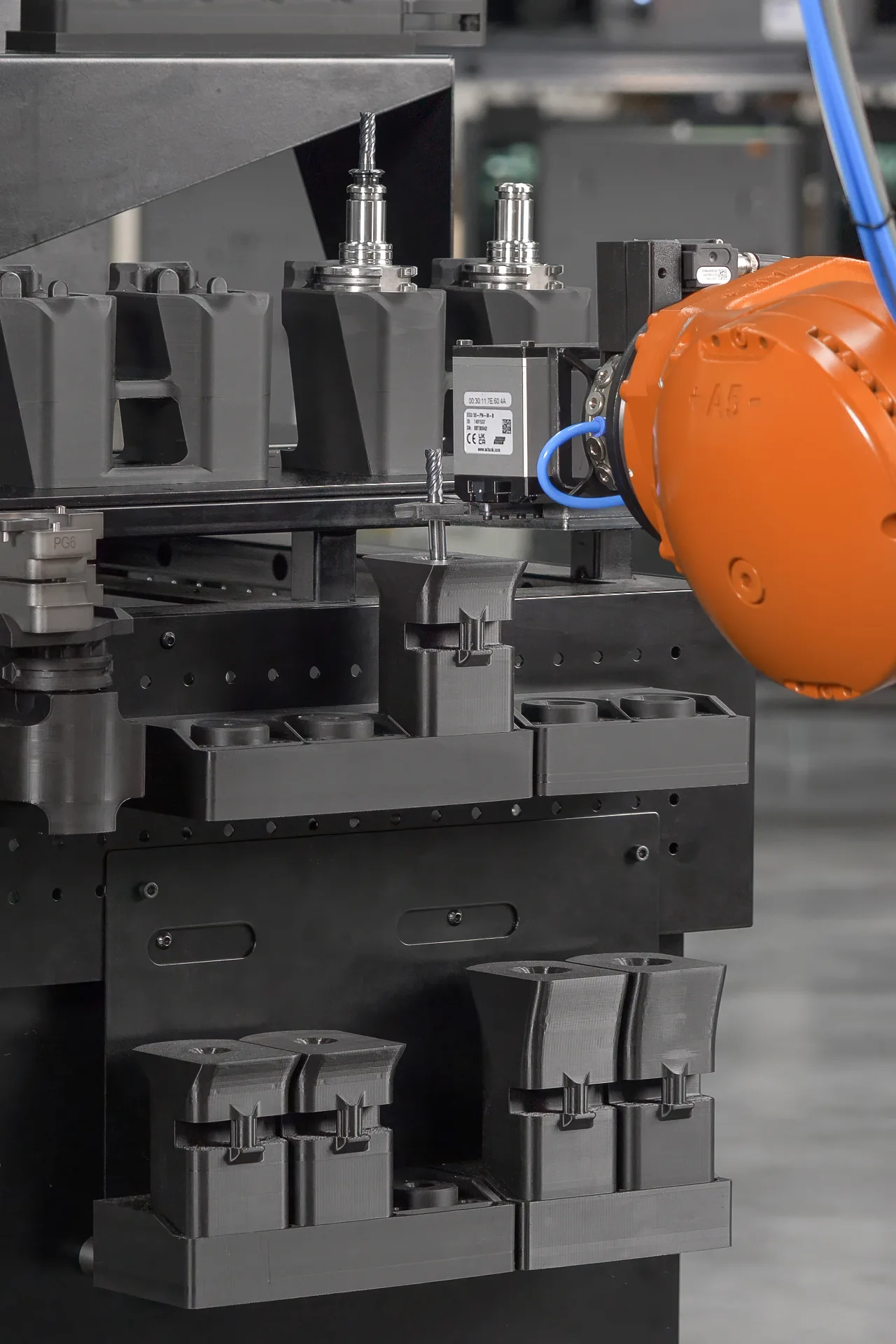
DHR's automation covers the printing workflow on the ATLIX xBUILD 3000, including a custom system that opens and closes the cylinder lids inside the printer, so the machine can change build cylinders without an operator. While the xBUILD 3000 is printing, the robot also swaps supply cylinders, moves recovery containers and reclaims powder at the sieving station.
The full engineering story is in our project article, Metal 3D Printing Automation with ATLIX xBUILD 3000.

What signals metal AM's shift to series production
Formnext 2026 drew 38,447 visitors and 765 exhibitors to 47,000 m² in Frankfurt,[^7] and among industrial exhibitors, the focus was on metal additive manufacturing moving from prototyping into series production. ATLIX sees the same shift with its customers:
"Right now, we're seeing production really scaling up in lots of industries, and automation is a key element of making that happen. It brings repeatability and constant output, and that's exactly what our customers want." Matthias Himmelsbach, CEO, ATLIX
Recent announcements and industry data back this up.
BMW Group adds automated ATLIX systems. ATLIX announced that BMW Group will install xBUILD 5000 systems to produce aluminum parts for prototyping and series use. The xBUILD 5000 loads and unloads cylinders automatically and restarts production within 15 minutes of a job finishing.[^8]
Large fleets need automated handling. US contract manufacturer VulcanForms ordered 200 metal printers for its factories in Devens, Massachusetts, taking its fleet of that model to 235 machines.[^9] Running a fleet of this size depends on fast cylinder changes and on scheduling jobs across many machines.
Defense is opening the door to series demand. In August 2026, the US Navy released technical requirements that remove administrative and engineering hurdles to using 3D printed metal parts in submarine construction and repair.[^10] The Pentagon has also awarded $23.5 million for printers that will produce Tomahawk missile mid-bodies.[^11]
Utilization is growing faster than hardware sales. According to Wohlers Report 2026, global AM revenue reached $24.2 billion in 2025, up 10.9%, with printing services growing 15.5% and system sales growing 3.6%.[^12] Manufacturers are focusing on getting more output from the machines they already have.

How does one robotic cell grow into a production line
As metal AM moves into series production, it is starting to work more like CNC machining: tight tolerances, repeat jobs and expensive machines that need to keep running between them. Many printed metal parts also go on to CNC machining for finishing, so the two processes increasingly share one production floor.
We bring years of experience automating CNC cells, where robots tend the machines and a MES sends verified programs to each one. With ATLIX, we are applying the same approach to metal additive manufacturing: the xBUILD 3000 is built for industrial-scale production, and DHR's automation keeps it running from one build to the next.
"Both companies fit very well together, and we have the same goal: maximum throughput for our customers and a lower price per part. That shared goal has already delivered good results, and we will target the rest of the workflow together: not just the machine, but depowdering, refurbishing the build plates and the whole process." Dimitar Hristakiev, CEO, DHR Engineering
Our Formnext demonstration used one printer, one powder station and one robot. The same setup is designed to scale:
Several machines on a rail: with the robot on a linear rail, one robot can tend several printers and a post-processing station. Additionally, metal printers can share one automated line with CNC machining and inspection cells.
A shared powder recovery station: recovered powder from all printers is sieved and reused at a single sieving station.
Other LPBF printers: the automation can be adapted to other machines, such as the ATLIX xBUILD 5000.

Thank you to the ATLIX team for a year of close collaboration, and to every manufacturer, partner and journalist who visited us at Hall 12, Booth D99.
Are you scaling metal additive manufacturing for series production? See how the automation works on our metal 3D printing automation page, or contact our team to look at your production workflow together.
Frequently Asked Questions on Metal AM Automation
Interview with Matthias Himmelsbach (CEO, ATLIX) and Dimitar Hristakiev (CEO, DHR Engineering) at Formnext 2026. Quotes are taken from the full interview and lightly edited for clarity.
From a first meeting at Formnext 2025 to a live concept demo a year later
A year ago at Formnext, we met the team at ATLIX, the industrial metal additive manufacturing company formerly known as TRUMPF Additive Manufacturing. We talked about a shared goal: removing the manual steps that keep laser powder bed fusion (LPBF) printers idle between builds. This November, at Formnext 2026, we came back to Messe Frankfurt with the result.
Installed by our team at the ATLIX booth in Hall 12, the robotic automation cell, paired with the xBUILD 3000, ran for all four days of the show. Instead of renders or a roadmap, visitors could watch the concept demonstration running live on the show floor.
The booth was busy throughout the week. Other companies in the industry brought their own customers to show them what automated metal printing can look like, which says a lot about where demand is heading.
The collaboration was covered in dedicated articles by VoxelMatters, Metal AM and 3Druck.com,[^1][^2][^3] and featured in Formnext previews and news roundups by 3D Printing Industry, 3DPrint.com and TCT Magazine,[^4][^5] which selected the automated xBUILD 3000 concept cell as one of 12 new technologies it highlighted from Formnext 2026.[^6]
“We were looking for a partner for this kind of integration, and a year ago we met at Formnext and started a discussion. The experience DHR brings in this field led us to start a joint project. We were very impressed with DHR's speed and expertise in our collaboration over the past year.” Matthias Himmelsbach, CEO, ATLIX
During the show, Matthias Himmelsbach, CEO of ATLIX, and Dimitar Hristakiev, CEO of DHR Engineering, joined us in front of the cell to discuss the engineering behind it, the economics of high-volume metal printing and what comes next.
Engineering for up to 98% utilization: inside and outside the ATLIX xBUILD 3000
Metal powder bed fusion can produce complex parts, such as internal cooling channels and lightweight lattice structures, that are expensive or impossible to machine. Yet in standard production setups, manufacturers report losing up to a third of their potential machine time while builds cool, get unpacked and are depowdered.
A metal printer only produces while its lasers are working. Every hour a finished build waits for an operator is lost output. For ATLIX, solving this meant looking beyond the build chamber:
"ATLIX stands for industrial additive manufacturing. What does that mean? First of all, repeatability: you need to get the same results out of the machine, consistently. Then productivity: continuously increasing machine utilization to bring down the cost per part for our customers. But it's not just about the machine. It's about integrating it into the larger process, and this is where DHR comes in." Matthias Himmelsbach, CEO, ATLIX
For this project, we automated the workflow both inside and outside the xBUILD 3000.[^5] The machine's removable build cylinders, closed powder system, up to two lasers and 300 × 300 × 400 mm build volume gave the automation a stable, predictable base.
"The xBUILD 3000 is an extremely reliable, very precise machine with consistent quality. That's the cornerstone we need to automate the process. Once the machine is reliable enough, automation is what brings out its full utilization potential: up to 98%." Dimitar Hristakiev, CEO, DHR Engineering
How DHR’s custom automation eliminates idle time
DHR's automation covers the printing workflow on the ATLIX xBUILD 3000, including a custom system that opens and closes the cylinder lids inside the printer, so the machine can change build cylinders without an operator. While the xBUILD 3000 is printing, the robot also swaps supply cylinders, moves recovery containers and reclaims powder at the sieving station.
The full engineering story is in our project article, Metal 3D Printing Automation with ATLIX xBUILD 3000.
What signals metal AM's shift to series production
Formnext 2026 drew 38,447 visitors and 765 exhibitors to 47,000 m² in Frankfurt,[^7] and among industrial exhibitors, the focus was on metal additive manufacturing moving from prototyping into series production. ATLIX sees the same shift with its customers:
"Right now, we're seeing production really scaling up in lots of industries, and automation is a key element of making that happen. It brings repeatability and constant output, and that's exactly what our customers want." Matthias Himmelsbach, CEO, ATLIX
Recent announcements and industry data back this up.
BMW Group adds automated ATLIX systems. ATLIX announced that BMW Group will install xBUILD 5000 systems to produce aluminum parts for prototyping and series use. The xBUILD 5000 loads and unloads cylinders automatically and restarts production within 15 minutes of a job finishing.[^8]
Large fleets need automated handling. US contract manufacturer VulcanForms ordered 200 metal printers for its factories in Devens, Massachusetts, taking its fleet of that model to 235 machines.[^9] Running a fleet of this size depends on fast cylinder changes and on scheduling jobs across many machines.
Defense is opening the door to series demand. In August 2026, the US Navy released technical requirements that remove administrative and engineering hurdles to using 3D printed metal parts in submarine construction and repair.[^10] The Pentagon has also awarded $23.5 million for printers that will produce Tomahawk missile mid-bodies.[^11]
Utilization is growing faster than hardware sales. According to Wohlers Report 2026, global AM revenue reached $24.2 billion in 2025, up 10.9%, with printing services growing 15.5% and system sales growing 3.6%.[^12] Manufacturers are focusing on getting more output from the machines they already have.
How does one robotic cell grow into a production line
As metal AM moves into series production, it is starting to work more like CNC machining: tight tolerances, repeat jobs and expensive machines that need to keep running between them. Many printed metal parts also go on to CNC machining for finishing, so the two processes increasingly share one production floor.
We bring years of experience automating CNC cells, where robots tend the machines and a MES sends verified programs to each one. With ATLIX, we are applying the same approach to metal additive manufacturing: the xBUILD 3000 is built for industrial-scale production, and DHR's automation keeps it running from one build to the next.
"Both companies fit very well together, and we have the same goal: maximum throughput for our customers and a lower price per part. That shared goal has already delivered good results, and we will target the rest of the workflow together: not just the machine, but depowdering, refurbishing the build plates and the whole process." Dimitar Hristakiev, CEO, DHR Engineering
Our Formnext demonstration used one printer, one powder station and one robot. The same setup is designed to scale:
Several machines on a rail: with the robot on a linear rail, one robot can tend several printers and a post-processing station. Additionally, metal printers can share one automated line with CNC machining and inspection cells.
A shared powder recovery station: recovered powder from all printers is sieved and reused at a single sieving station.
Other LPBF printers: the automation can be adapted to other machines, such as the ATLIX xBUILD 5000.
Thank you to the ATLIX team for a year of close collaboration, and to every manufacturer, partner and journalist who visited us at Hall 12, Booth D99.
Are you scaling metal additive manufacturing for series production? See how the automation works on our metal 3D printing automation page, or contact our team to look at your production workflow together.
Frequently Asked Questions on Metal AM Automation
References
[^1]: VoxelMatters. ATLIX and DHR Engineering bring automated metal AM concept to Formnext 2026. November 15, 2026: voxelmatters.com
[^2]: Metal AM. ATLIX and DHR demonstrate robotic automation for metal AM at Formnext. November 18, 2026: metal-am.com
[^3]: 3Druck. Formnext 2026: ATLIX and DHR Engineering automate the xBUILD 3000 metal printer. November 2026: 3druck.com
[^4]: 3D Printing Industry. ATLIX to Showcase xBUILD 5000 and Robotic Automation at Formnext 2026. November 2026: 3dprintingindustry.com
[^5]: 3DPrint.com. 3D Printing News Briefs, November 19, 2026: Formnext, Formnext, Formnext! November 19, 2026: 3dprint.com
[^6]: TCT Magazine. Formnext 2026: A closer look at 12 new 3D printing technologies. November 23, 2026: tctmagazine.com
[^7]: 3Dnatives. Formnext 2026 recap. November 24, 2026: 3dnatives.com
[^8]: TCT Magazine. BMW Group to install ATLIX xBUILD 5000 metal 3D printers at Additive Manufacturing Campus. November 16, 2026: tctmagazine.com
[^9]: 3DPrinting.com. VulcanForms Orders 200 EOS M4 ONYX Laser Powder Bed Fusion 3D Printers, the Largest Single Order in EOS History. November 18, 2026: 3dprinting.com
[^10]: U.S. Navy. Navy Removes Bureaucratic Barriers to Accelerate 3D Printing and Accelerate Submarine Lethality. August 21, 2026: navy.mil
[^11]: National Defense Magazine. Pentagon Looks to 3D Print Tomahawk Missile Parts. November 19, 2026: nationaldefensemagazine.org
[^12]: Wohlers Associates / ASTM International. Wohlers Report 2026. February 2026: astm.org